

Voters Sour on Democratic Party, But Not Its Rising Leaders
Democrats are entering the midterm cycle with clear political momentum, holding a sizable lead on the Generic Congressional Ballot and strong positions in key Senate races. While the party’s infrastructure remains unpopular, leading to a party favorability deficit, its prospective 2026 and 2028 leaders are viewed more favorably than their Republican counterparts.
Since the 2024 presidential election, the Democratic Party has had significantly lower favorability than the Republican Party in polls. In the latest RCP Average, the Democratic Party had a net favorability of -20, while the Republican Party, even after slipping in recent months since the start of the Iran war, had a net favorability of -15.4.
A closer look at the crosstabs provides insight into the source of this lower favorability. In a CNN poll that asked about party favorability, 81% of self-identified Republicans had a favorable opinion of the Republican Party, while only 69% of Democrats had a favorable opinion of the Democratic Party. A similar share of independents approved of both parties, at just 18% each, indicating that the problem is driven in large part by Democrats’ dissatisfaction with their own party.
This pattern is also reflected in the favorability of congressional leadership. While House Speaker Mike Johnson and Senate Majority Leader John Thune face net favorability ratings of -8.6 and -11.4, respectively, their Democratic counterparts, House Minority Leader Hakeem Jeffries and Senate Minority Leader Chuck Schumer, face -11.4 and -22.8, respectively. Schumer’s favorability among Democrats stood at just 33%, with 31% viewing him unfavorably, while Jeffries fared only slightly better, with 36% favorable and 20% unfavorable, the CNN poll found.
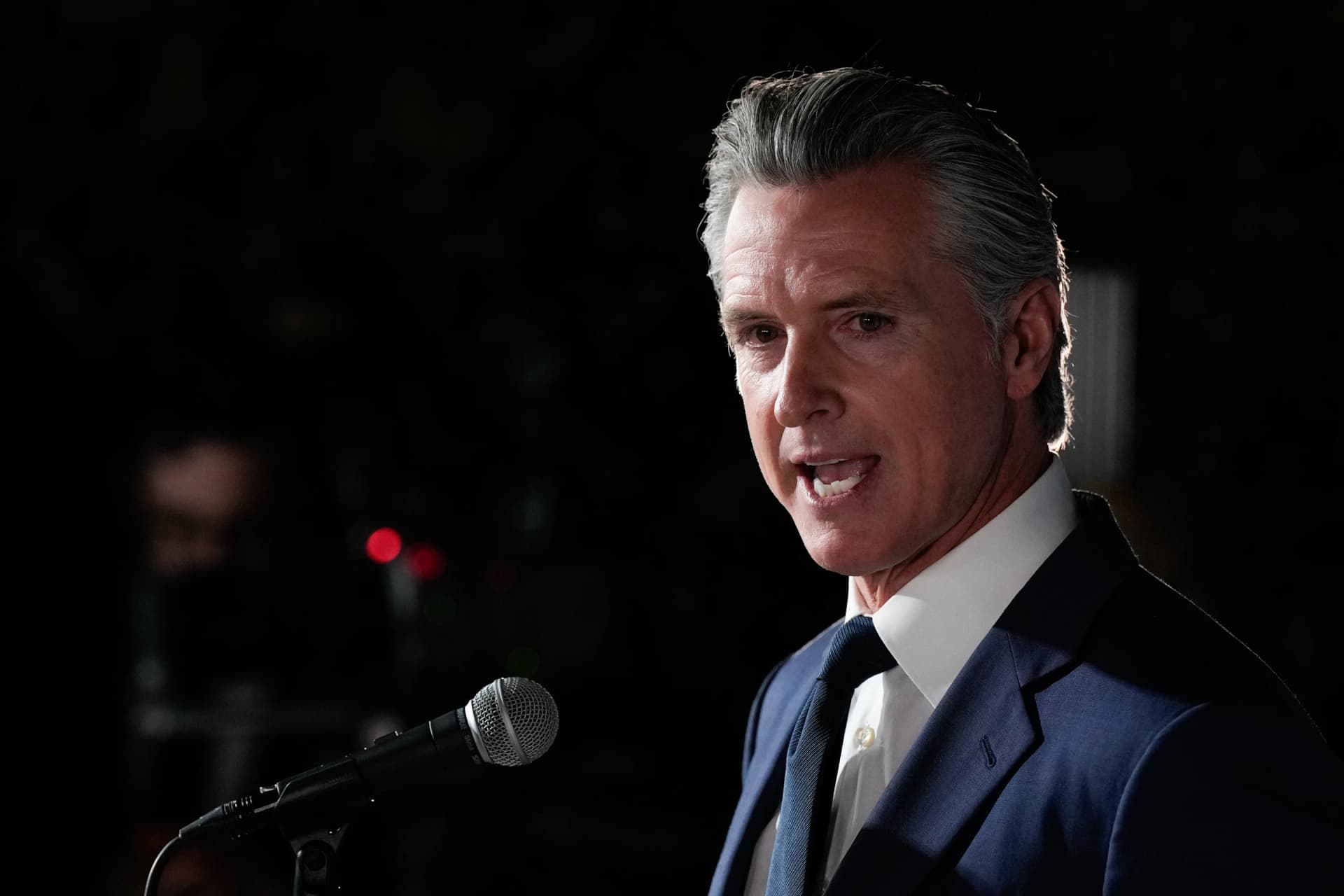
Notably, however, this favorability deficit does not extend to potential Democratic presidential candidates. In the most recent YouGov polling on candidate favorability, Vice President JD Vance had a net favorability of -14. Democratic Presidential frontrunner Gavin Newsom registered -9, while other potential candidates, such as Rep. Alexandria Ocasio-Cortez and former Secretary of Transportation Pete Buttigieg, posted -7 and -4, respectively. In another YouGov poll taken March 13-16, after Operation Epic Fury began, Secretary of State Marco Rubio’s favorability stood at -16.
These figures are more indicative of how voter turnout may look in 2026 and 2028. While Democrats face challenges with the party’s brand and infrastructure, that same level of discontent does not appear to extend to likely future leaders.
This dynamic likely underlies the Democratic lead in the generic congressional ballot and their overperformance in Senate races. Despite trailing in overall party favorability, Democrats lead by 5.6 points on the generic congressional ballot. In toss-up Senate races across swing states, Democrats hold a 79% or greater chance of winning in betting markets. Even in Texas, Democrat James Talarico is given a 46% chance to win.
The outlook for the 2028 presidential election may be the clearest signal of how Democrats are viewed, with Democrats’ chances rising to 61%, up from 55% before the Iran war. For context, Trump peaked at a 66% chance of winning the 2024 election only after President Joe Biden’s extremely poor June debate performance and the assassination attempt in Butler, Pennsylvania. Such an early advantage for Democrats suggests that while the Democratic Party’s favorability is slightly lower than that of Republicans, Republicans are the party on the back foot heading into 2026 and 2028.
State of Union
.