

Trump Approval Nearing First-Term Low
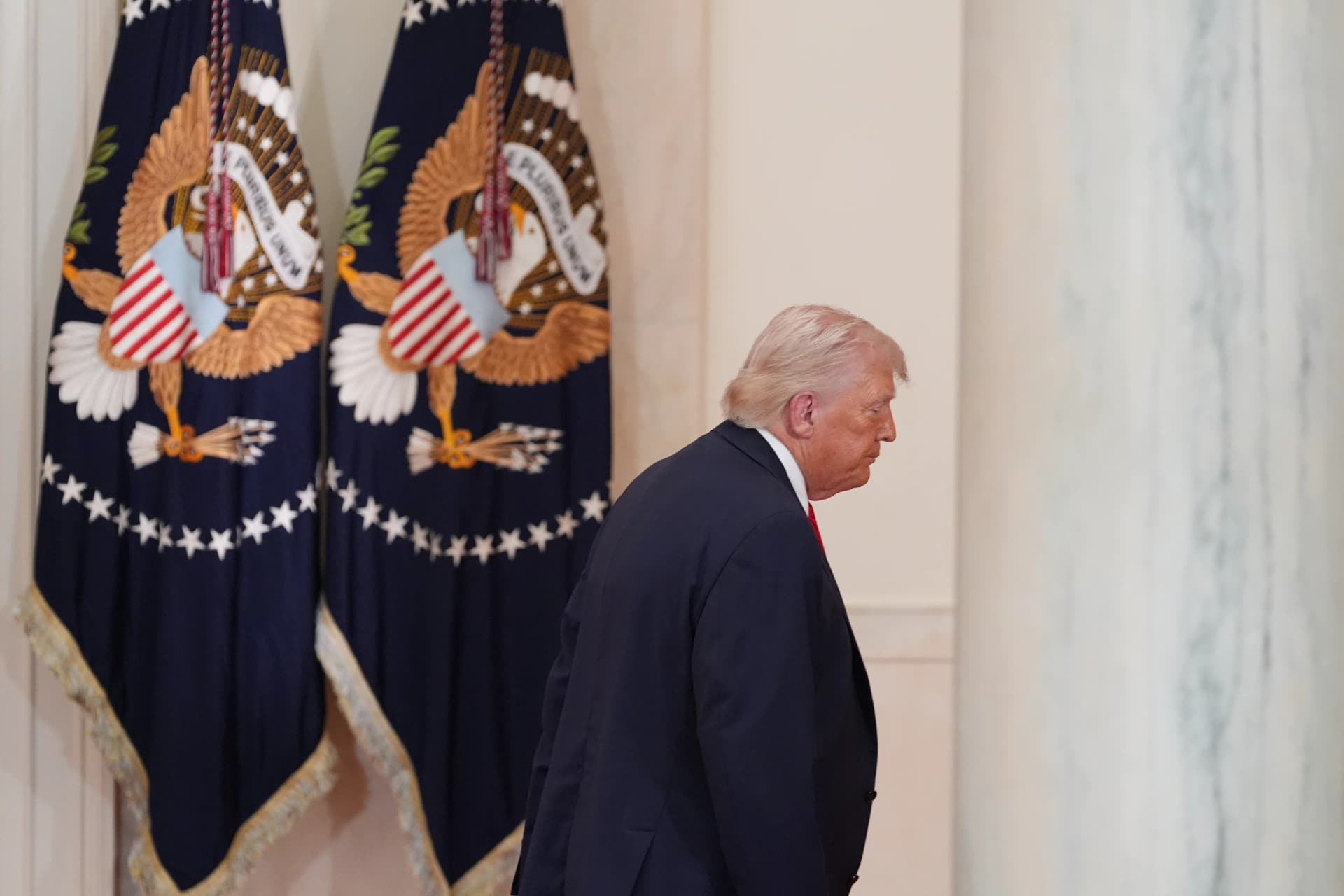
President Donald Trump’s approval has fallen to a new second-term low as inflation and the war with Iran weigh on voters, putting Republicans on increasingly shaky ground ahead of the midterms.
The latest RealClearPolitics Polling Average puts Trump’s net approval at a second-term low of -19.2, with 39.1% approving and 58.3% disapproving. Despite occasional month-to-month fluctuations, his approval has steadily declined since he returned to office.
His current approval rating is only slightly above his first-term low of 37%, recorded in December 2017, when his net approval stood at -21.1. Even after the Jan. 6, 2021, attack on the U.S. Capitol, Trump’s approval was higher than it is now, with a net rating of -18.5.
The president’s struggles largely stem from two related issues: inflation and the war with Iran. In the latest Personal Consumption Expenditures Price Index report, which the Federal Reserve uses as its primary measure of inflation, prices rose 3.7% over the year ending in June. That is well above the Federal Reserve’s 2% inflation target.
Inflation rose from 2.9% in February and a second-Trump-term low of 2.3% in April 2025, driven largely by a spike in oil and energy prices.
Oil prices had consistently trended downward since the start of the Russia-Ukraine war. However, after the war with Iran began, Brent crude oil prices surged to $118 per barrel, up from about $68 per barrel in February. Prices have since declined to about $80 per barrel but remain elevated compared with their prewar level.
Trump’s negative approval rating on inflation, which stands at -39.1 in the RCP Average, coincides with his second-worst issue: the Iran war. He currently has a net approval rating of -25.4 on the conflict, a new low since the war began. The decline came in polls after four more U.S. service members were killed in the Middle East in late July.
Now that the memorandum of understanding has collapsed, Trump is seeking a new agreement to reopen the Strait of Hormuz, which has again been closed, and restart nuclear negotiations. Betting markets remain doubtful that a nuclear deal will be reached this year, with Polymarket giving it a 34% chance by Dec. 31.
Trump’s negative approval ratings and the war have ramifications for the midterms. Democrats currently lead Republicans by 6.9 points in the 2026 Generic Congressional Ballot RCP Average and have an 86% chance of winning control of the House, according to Polymarket.
Even states such as Ohio and Iowa, which have shifted toward Republicans in recent elections, appear competitive in 2026.
In Ohio, former Sen. Sherrod Brown has a 51% chance of winning the Senate race, according to Polymarket, and holds a 0.6-point lead in the RCP Average over Sen. Jon Husted, who replaced Vice President JD Vance. In Iowa, Polymarket only gives Republican Rep. Ashley Hinson a 56% chance of defeating state Rep. Josh Turek. The two candidates are tied in the RCP Average, a big change from 2024 when Trump won the state by 13.2 points.
Overall, Republicans still have a 56% chance of retaining control of the Senate. Without inflation and the war weighing on Republicans, their odds would likely be higher, given that Democrats need to win every swing state and two Republican-leaning states, such as Iowa, Alaska, Ohio, or Texas.
State of Union
.