

Trump Approval Falls to New Low, Democrats’ Midterm Lead Grows
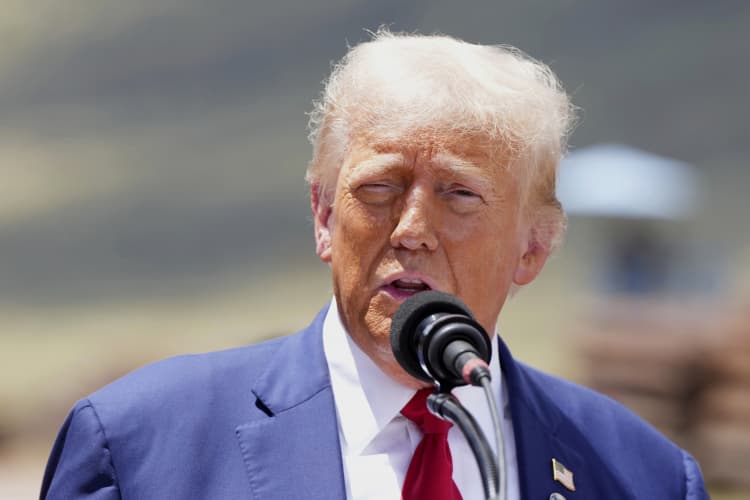
Since the start of the Iran war, President Trump and the administration have touted high approval ratings, especially among “MAGA” voters. While Republicans still generally support the president, that support is falling, and among independents who helped Trump and Republicans win in 2024, support has cratered.
Polling shows Trump at the lowest approval of his second term, a decline that is also dragging down 2026 Generic Congressional Ballot numbers to their lowest point of the term. In the RealClearPolitics Polling Average, Trump faces -15.8 net approval, with only 41% approving and 56.8% disapproving, and Democrats hold a 5.9-point lead in the Generic Congressional Ballot.
While low, neither of these polling numbers is unprecedentedly catastrophic, but they do not bode well. In 2018, Democrats led by 7.1 points on March 30, and in 2022, Republicans led by 3.6 points. In both cases, the party that led went on to retake the House, but neither lost its Senate majority.
A similar story is likely in 2026, where Democrats’ road to winning a majority in the Senate is difficult but not impossible. In addition to winning swing states like North Carolina, Michigan, and Georgia, Democrats also need to pick up seats in Texas, Ohio, and Alaska to take back the Senate. Yet with a heavy advantage in the GCB, they still have a solid shot at taking some of those red-leaning states, according to betting markets, which give them a 48% chance to retake the Senate.
Presidents have also faced much lower approval ratings than Trump has now. At this point in their second terms, President Barack Obama had 42.9% approval, slightly higher than Trump, while President George W. Bush had 38.8% approval, slightly lower. The previous two-term presidents, Bill Clinton and Ronald Reagan, had significant positive approval in March of the second year of their second terms, at 64% and 63%, respectively, according to Gallup polling. Richard Nixon, who would resign in August just a few months later, had by far the lowest approval, at just 26%.
Still, the 41% approval is worrisome, as it is lower than Trump’s approval at this point in his first term, when it was at 41.7%. This is the first time his second-term approval has dropped below where it was at the same point in his first term.
For 2028 and beyond, this does not bode well for Republicans. Before the 2024 election, even in polls like those from Economist/YouGov, which predicted a Harris popular-vote win by 2 points, Trump polled at 40% favorability among independents. By inauguration, 47% of moderates had a favorable opinion of him. Now, only 29% of independents approve of Trump’s job performance.
This is a significant dent in the coalition that supported Trump. The latest Economist/YouGov poll also found that 17% of 2024 Trump voters disapprove of Trump, while only 3% of Kamala Harris voters approve. While it is true that the majority of Trump voters still approve of the job the president has done, with one-sixth of voters now disapproving of the person they voted for, the coalition Trump brought together has fractured, and the next Republican presidential candidate will not be able to simply ride the coattails of what Trump built in 2024, but will need to assemble a new coalition to win in 2028.
State of Union
.