
The Politics of Religious Freedom
Good morning. We’re some 45 days away from the 2026 midterms. Most media observers – recalling with well-earned humility how they felt after the “red wave” of 2022 turned into a mild reddish ripple – are refraining from giving apocalyptic predictions about November. That said, it doesn’t look good for Republicans, as the two other pieces in today’s newsletter by Jonathan Draeger and Carolina Lumetta detail.
Yesterday was Constitution Day; also Iowa Sen. Chuck Grassley’s birthday. It’s tempting to wonder what the Founders would think of a 93-year-old Senate committee chairman. They might be sympathetic, as the oldest Founding Father was the beloved Benjamin Franklin.
“Dr. Franklin,” as he was known out of respect, was 70 years old when he headed the Philadelphia committee that produced the Declaration of Independence. He was 76 when he helped negotiate the treaty in Paris that ended the Revolutionary War. And he was 81 when he served as a delegate in the Constitutional Convention in 1790.
As one might expect, Franklin had many pithy things to say about the aging process. My favorite is a 1757 entry in “Poor Richard’s Almanack,” when he wrote the following: “Work as if you were to live 100 years; pray as if you were to die tomorrow.”
The Franklin quotation that seems most relevant to me on this day, however, concerns Islam. (Are you surprised? What did Dr. Franklin ever not discuss?) Ben Franklin considered religious freedom an indispensable feature of the American Revolution, and in his autobiography he wrote with pride about a large nondenominational meeting house built in Philadelphia 25 years before the Revolution. “If the Mufti of Constantinople were to send a missionary to preach Mohammedanism to us,” Franklin wrote, “he would find a pulpit at his service.”
With mosques going up at a rapid rate all over the United States and Canada – and in Europe as well – many westerners are decidedly less sanguine about the proliferation of imams in their midst. In Michigan, a U.S. Senate race – and perhaps control of the U.S. Senate itself – may hinge on such attitudes.
An interesting Washington Post poll this week finds Democratic candidate Abdul El-Sayed slightly ahead of his Republican opponent Mike Rogers, but leading by a significantly lower percentage than the Democratic gubernatorial candidate. It must be said that El-Sayed’s religion is hardly the only difference between himself and a “normie” Democrat. He’s never held political office, for one thing. Also, he campaigns with America-hating provocateur Hasan Piker, bashes Israel regularly, and is significantly more to the left of the average Michigan voter on a host of other issues.
“It is tempting to attribute El-Sayed’s lackluster polling exclusively to Islamophobia,” George Mason University professor Justin Gest, told The Post, “but his socialist endorsements and policy positions are certainly not helping him either.”
Yesterday’s date is also a reminder that we’ve seen some of these tensions previously in this country and that they often seem less threatening in history’s rear-view mirror.
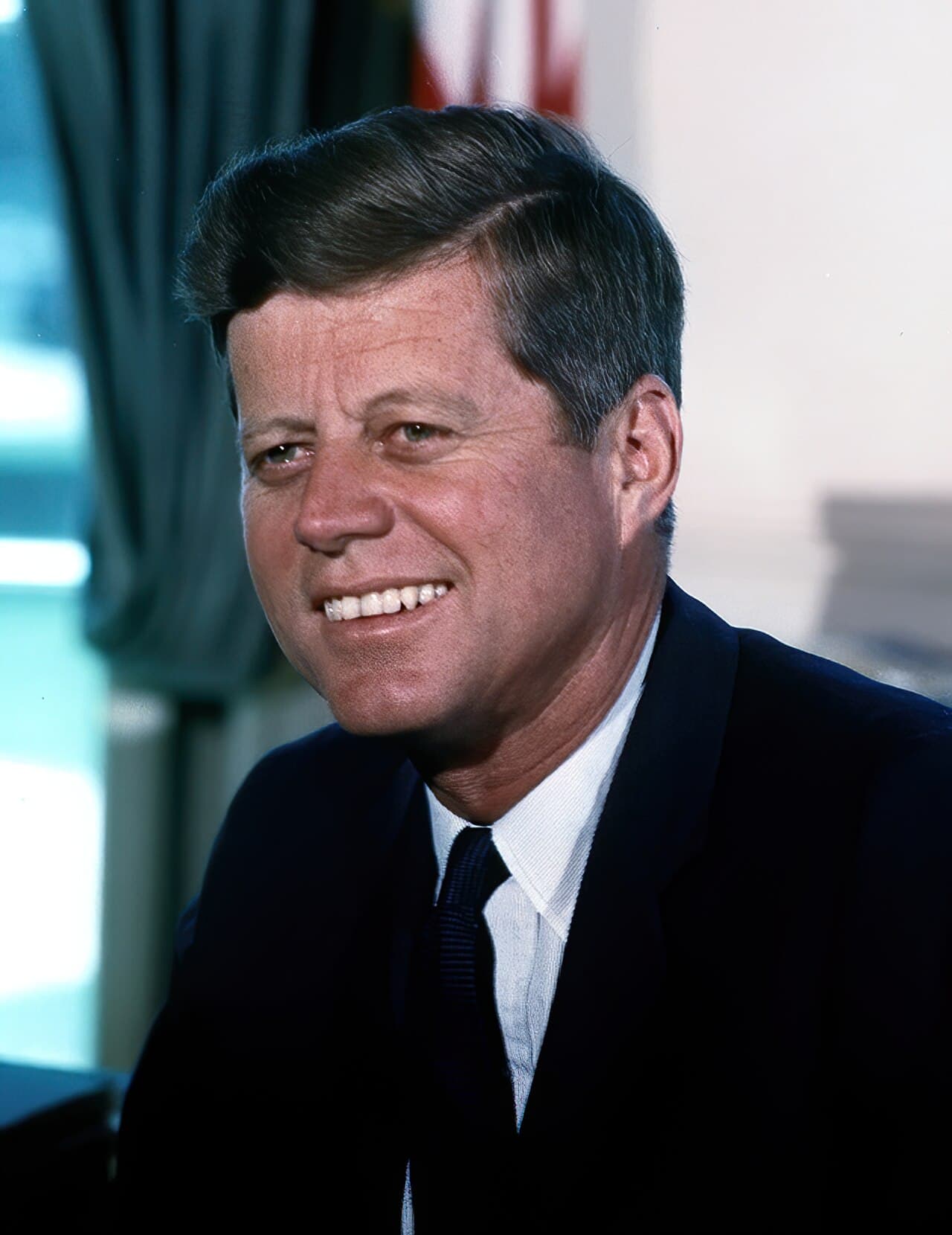
It was on Sept. 17, in the year 1960, that John F. Kennedy ventured into Eastern Carolina while campaigning for president. The Democrats’ old guard cautioned the youthful Massachusetts senator’s campaign aides that it might be hostile territory for a Roman Catholic candidate. Terry Sanford, a 1960 North Carolina gubernatorial candidate the same age as Kennedy (43), was warned in a caustic letter by the senior clergyman at Greenville’s oldest Methodist Church that a Catholic president would “surely cut America’s head off.”
Yet Terry Sanford and Jack Kennedy represented a new generation of postwar Democrats who didn’t frighten easily. Sanford had been a U.S. Army paratrooper who fought at the Battle of the Bulge, while JFK still suffered the physical effects of his heroics in the Pacific after his PT boat was sunk.
In any event, Kennedy was met by large and enthusiastic crowds in North Carolina where it became evident that his decision to address the religion issue head-on was paying dividends. Although Kennedy’s faith was a source of great pride to Catholic voters – particularly Democrats and most particularly Irish-Americans – a 1959 Gallup Poll showed 25% of U.S. voters were disinclined to support a Catholic for president.
Antipathy was strongest in the Bible Belt, which presented a challenge because in those days a successful Electoral College strategy for a Democratic presidential candidate necessitated running well in the Deep South. It was why Kennedy was in North Carolina 66 years ago this week. It was why he’d chosen Texas Sen. Lyndon Johnson as his running mate. And it was the reason he had ventured five days earlier – on his seventh wedding anniversary, no less – into the inner sanctum of anti-Catholicism when he spoke to the Greater Houston Ministerial Association.
“I am not the Catholic candidate for president,” Kennedy told the Protestant pastors in that iconic appearance. “I am the Democratic Party’s candidate for president who happens also to be a Catholic. I do not speak for my church on public matters, and the church does not speak for me.”
Earlier that same day, Sen. Kennedy had visited the Alamo. In preparation, he’d attempted to find out how many Catholics had fought there. The best his aides could do was furnish the candidate a list of Irish names among the dead. The result of this uncertainty produced one of the most evocative sentences of the campaign.
“Side by side with Bowie and Crockett died McCafferty and Bailey and Carey,” Kennedy said. “But no one knows whether they were Catholics or not, for there was no religious test at the Alamo.”
State of Union
.