

Supreme Court Approval Hits New Low as GOP Support Slides
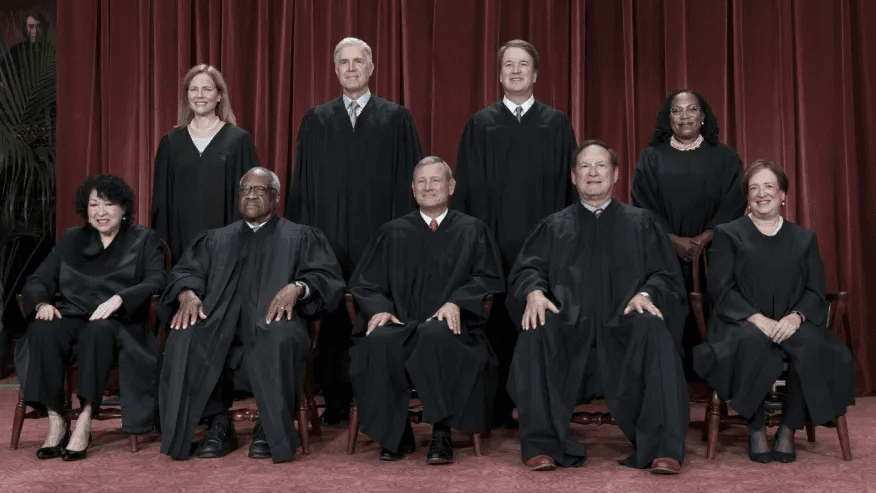
Almost no American institution has escaped the growing public distrust of the 21st century, a trend that has intensified since Donald Trump’s rise and the COVID-19 pandemic. The Supreme Court is no exception, with its approval rating falling to the lowest level on record.
The latest Gallup poll, conducted July 1-19, found that approval of the Supreme Court stood at just 33%. That was down from 42% in September 2025 and below the previous record low of 39% in July 2025. From the time Gallup began asking about approval of the Supreme Court through 2020, approval fluctuated between 40% and 61% but never fell below 40%.
The latest decline in approval of the Supreme Court came primarily from Republicans, as Democrats’ approval of the court was already extremely low. In September 2025, 79% of Republicans approved of the court, compared with only 58% in the latest poll. Meanwhile, approval stood at 12% among Democrats and 35% among independents.
Democratic approval of the court has remained low since the Dobbs decision overturned Roe v. Wade in June 2022. Approval among Democrats fell from 36% in September 2021, before the decision, to 13% in July 2022, shortly after the Dobbs ruling.
The decline in Republican support for the court likely indicates that its decisions against the Trump administration, particularly its rulings on birthright citizenship and tariffs, mattered more to conservatives than cases in which the court ruled in the administration’s favor, which included affirming the president’s ability to remove members of administrative agencies, such as the Federal Trade Commission, and upholding state laws limiting transgender athletes’ participation in women’s sports.
The conservative justices who dissented in the birthright citizenship case, Trump v. Barbara, were more popular among conservatives than those who joined the majority. A July 3-6 Economist/YouGov poll found that Justice Clarence Thomas, who wrote the dissent, had a 64% favorability rating among 2024 Trump voters. Justice Brett Kavanaugh, who partially dissented and said Congress, rather than an executive order, could address the issue, followed at 58%. Justices Samuel Alito and Neil Gorsuch, who also dissented, had favorability ratings of 53% and 51% among conservatives, respectively.
Justice Amy Coney Barrett and Chief Justice John Roberts, both appointed by Republican presidents, joined the majority in ruling that the Constitution guarantees birthright citizenship to children born in the United States regardless of their parents’ immigration status. They had lower favorability ratings among Trump voters, at 38% and 47%, respectively.
Public popularity, of course, should not be the foremost concern of Supreme Court justices. The Constitution is specifically designed to insulate them from public opinion by granting them lifetime appointments and shielding them from direct elections.
But a prolonged period of unpopularity could create problems for the court. Former Vice President Kamala Harris, for example, said during a call with the left-wing nonprofit Emerge earlier this year, “Let’s invite ideas, for example, that are about Supreme Court reform, including the notion of expanding the court.” If the court’s unpopularity persists, it could lead to additional challenges to its independence.
Even at just 33% approval, the Supreme Court is not the least popular of the three branches of government. In the RealClearPolitics Polling Average, only 23% approve of the way Congress is handling its job.
That figure is not historically low for Congress, however. During President Barack Obama’s second term, congressional job approval never rose above 20% and reached a record low of just 8.5%.
* * * *
State of Union
.