

Support for Iran War Hits New Low After U.S. Troop Deaths
Three service members were killed and dozens more were injured over the weekend after the temporary peace established by the memorandum of understanding with Iran collapsed and hostilities resumed. The continued fighting has further eroded approval of the conflict, which now sits at its lowest point since the war began.
In the latest RealClearPolitics Polling Average for approval of the war, only 37% approved, while 60.4% disapproved, for a net approval rating of -23.4 points. In the early days of the war, net approval was much higher, at -5.4 points. The latest poll included in the average concluded July 13, meaning the latest deaths will likely drag approval of the war down even further.
Two of the deaths occurred in Jordan, where Iran struck a U.S. base on Friday, killing Pvt. Isabella Gonzales and Lt. Tyler James Feehan. An examination is still underway to determine whether a third service member, who was reported missing after the attack, was also killed.
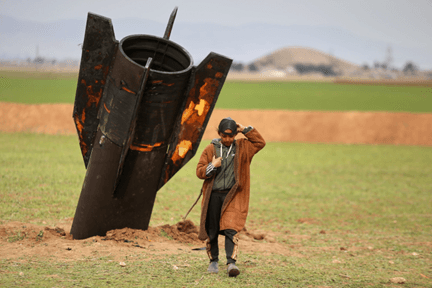
Another service member was killed in Iraq on Saturday during the controlled detonation of unexploded ordnance from a downed Iranian attack drone. President Trump wrote Monday on Truth Social, “Every time Iran kills an American Soldier they will pay for that killing many times over!”
Patience for the now four-and-a-half-month war is wearing thin. When asked in an Economist/YouGov poll how long the U.S. should be willing to continue fighting to achieve its objectives, the plurality, 48%, said the war should end immediately, while only 20% said the U.S. should continue fighting for as long as necessary to complete its objectives. When asked whether the U.S. should make a deal to end the war as quickly as possible, 65% agreed, while 15% said it should not.
Despite wanting the war to end, Americans are pessimistic about how long it will last. Only 8% said they believed the war would end within a month of when they were surveyed, between July 10 and 13. Another 46% said they believed it would last between one month and one year, while 46% said they believed it would last one year or longer.
Betting markets reflect a similar outlook. A Polymarket betting market gives a 56% chance that there will be a two-week period during which the U.S. does not strike Iranian territory before Aug. 31. Betting markets also indicate there is still a 27% chance that the U.S. will begin an invasion of Iran before the end of the year.
While the war has hurt Trump’s approval rating, it has not caused it to collapse. Since Operation Epic Fury began Feb. 28, his net approval rating has fallen from -11.4 points to -14.5 points.
President George W. Bush’s approval trajectory looked similar following the beginning of the Iraq War. On March 19, 2003, when Bush announced the invasion of Iraq, he had a net approval rating of +26 points, with 60% approving of his performance at the time. Although his approval rating spiked during the first month of the war, unlike Trump’s, which declined, his net approval had declined to about +18 points roughly four months into the conflict. Over the following year, the extraordinary approval boost Bush received after Sept. 11, which peaked at a net +80.9 points, had fully evaporated and became negative.
State of Union
.