

Statistically Speaking, Don’t Count Republicans Out of the Midterms
If the current RealClearPolitics Polling Averages held through Election Day, Democrats would win 53 Senate seats and take control of the chamber, and betting markets largely agree that Democrats are the clear favorites heading into Tuesday. But being the favorite is not the same as being a sure thing, and with several key races separated by less than 2 points, Republicans still have a very real chance of keeping the Senate.
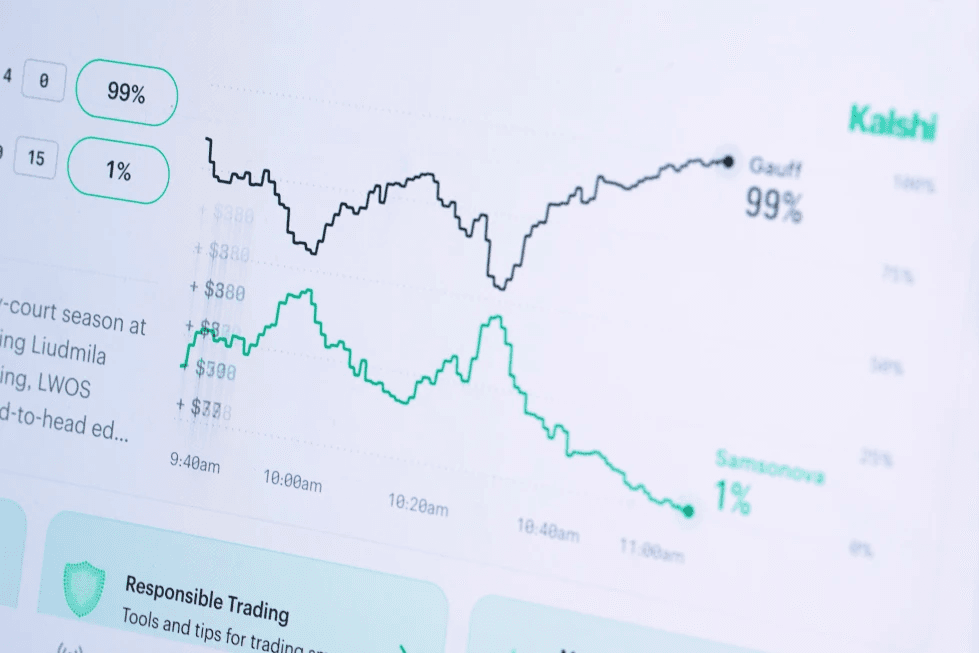
On Nov. 4, the day after Election Day, if Republicans manage to keep at least 50 Senate seats, there will once again be a cacophony of voices insisting that betting markets are inaccurate, since the latest numbers from Polymarket’s betting markets give Democrats a 68% chance of winning the Senate.
This happens because most people don’t have a good feel for how percent chances work. Imagine you had a trick coin weighted to land on heads 68% of the time. If you flipped it once and it came up tails, that wouldn’t prove the coin was fair, since a weighted coin still lands on tails plenty of the time.
Even several flips can be misleading. If you flipped that coin 10 times and got seven heads, that might seem like proof it was rigged, but a normal coin lands on heads seven or more times out of 10 about 1 in 6 times just by luck. To be statistically confident that you weren’t just being fooled by a lucky streak, you would need to flip it about 78 times, on average.
This is why a single election tells you so little about whether betting markets are any good. An election is like flipping that weighted coin just once, and a 68% chance means the underdog still wins about 1 in 3 times. If Republicans hold the Senate, that wouldn’t show the markets were wrong any more than a single tail would show the coin was fair. The only real way to judge betting markets is to look at hundreds of their predictions over many races and years and check whether the candidates they gave a 68% chance actually won about 68% of the time.
A Democratic loss would, however, mean that the polls were incorrect in their predictions. Kansas is essentially tied, with Democrat Adam Hamilton leading Republican Sen. Roger Marshall by only 0.2 points, so either party winning that race would be well within what the polls are showing. Nebraska, where independent Dan Osborn is challenging Republican Sen. Pete Ricketts, is harder to read, since too little recent polling has been done there for RCP to calculate a current average. Democrats hold narrow leads of less than 2 points in Maine and Alaska, which means it would take only a modest polling error in Republicans’ favor for those seats to flip.
Republicans’ path to keeping the Senate doesn’t require a dramatic polling miss, just a modest one across a handful of races. They would also need to hold on to the seats where they are narrowly ahead, including South Carolina and Iowa.
A polling miss in Republicans’ favor is by no means guaranteed, however. Recent midterm elections, particularly 2022, overestimated Republicans in several key swing-state Senate races. In the last three presidential elections, though – in 2016, 2020 and 2024 – Republicans were famously underestimated by the polls.
Overall, Democrats lead in this year’s polls, but the chance that Republicans outperform them, especially in red-leaning states, is why betting markets favor Democrats but aren’t giving them a 90% to 100% chance of winning the Senate.
State of Union
.