

Red States in Play in 2026 Midterm Senate Contests
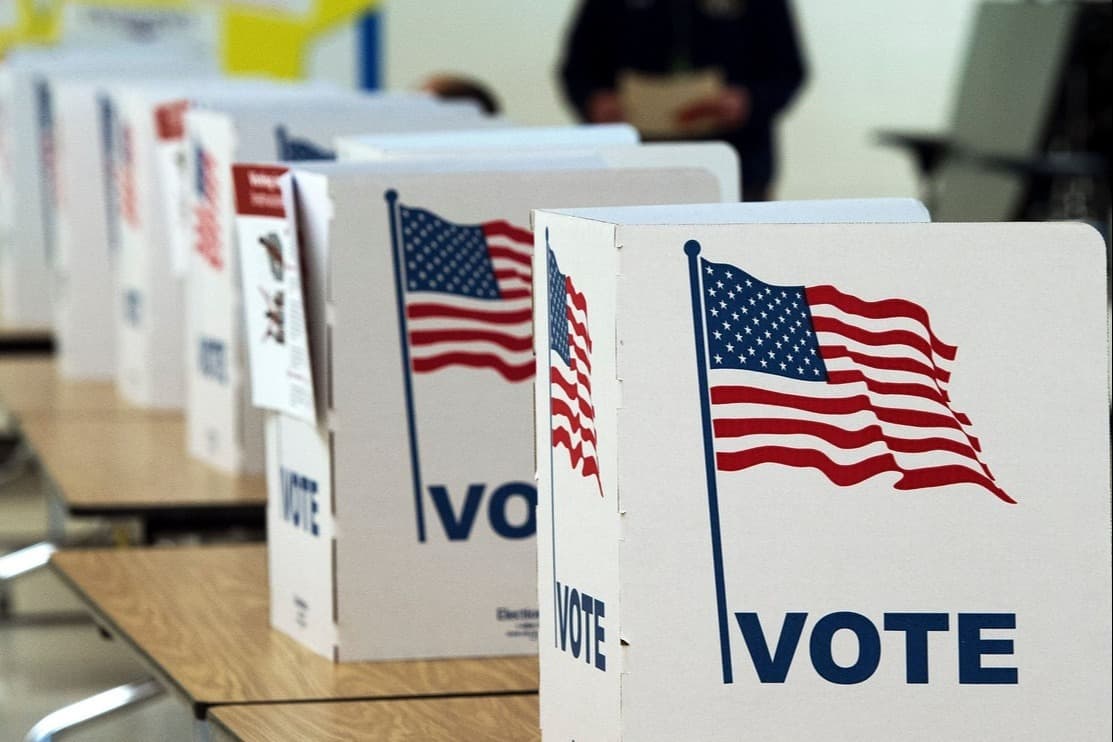
As the 2026 Senate map comes into focus, Democrats hold clear advantages in several swing states, forcing Republicans onto defense well beyond the usual battlegrounds. With likely GOP losses in Michigan, North Carolina, and Georgia, the fight for Senate control is shifting toward traditionally red states where polling and betting odds suggest significant vulnerability.
The typical swing states with Senate elections this year are Michigan, North Carolina, and Georgia. All three states, even where there is no Democratic incumbent, currently show notable Democratic leads in polling. In Georgia, Sen. Jon Ossoff leads GOP frontrunner Mike Collins by 2.3 points; in North Carolina, former Gov. Roy Cooper leads former RNC Chairman Michael Whatley by 8.6 points; in Michigan, former Rep. Mike Rodgers trails Democratic frontrunner Mallory McMorrow by 1.5 points. All three states also show near-identical betting odds, with a 75% to 78% chance that Democrats win each race.
If Democrats were to sweep all three states, however, they would only gain one Senate seat, as Michigan and Georgia are already held by Democratic incumbents. That outcome would leave Republicans with a 52-48 majority.
To gain additional seats, Democrats must target states where Republicans are currently favored. One such state, surprisingly to those who do not follow the maps closely, is Maine. Republican Sen. Susan Collins has held the seat since 1997 despite the state otherwise voting blue, including a nearly 7-point margin for Harris in 2024.
In polling, Collins narrowly leads one potential opponent, Democratic Gov. Janet Mills, but trails Democrat Graham Platner slightly. Betting markets still favor the Democratic nominee, giving Democrats a 70% chance to win the race.
Maine is the last seat where Democrats are favored. However, with Democrats leading by 4.7 points in the Generic Congressional Ballot, a 7.4-point swing from Republicans’ 2.7-point lead in 2024, traditionally red states are also in play.
The most competitive of these are Alaska, Texas, and Ohio.
Alaska is one of the most plausible Democratic targets, having flipped in a statewide contest in 2022 when the state’s lone House seat was on the ballot. Sen. Dan Sullivan’s likely opponent is Mary Peltola, who defeated Sarah Palin in the 2022 House race and went on to lose a statewide contest by just 3 points in 2024. Betting markets on Kalshi give Sullivan a 55% chance of holding the seat.
In Ohio, Democratic Sen. Sherrod Brown, who served from 2007 to 2025, will face John Husted, who was appointed to replace JD Vance. Given that Bernie Moreno defeated Brown by only 3.6 points in 2024, and with a projected 7.5-point Democratic swing, Brown has a viable path to reclaiming the seat. Betting markets currently give Husted a 60% chance of winning.
In Texas, Sen. Ted Cruz defeated Colin Allred by 8.5 points in 2024, making the race significantly more difficult for Democrats, though still theoretically possible if the full 7.4-point Democratic swing materializes. The latest Emerson poll found Democrat James Talarico leading Jasmine Crockett in the Democratic primary by 9 points. In general election matchups, Talarico was tied with Texas Attorney General Ken Paxton, the Republican primary frontrunner, and trailed incumbent Sen. John Cornyn by 3 points. Betting markets give whichever Republican wins the primary a 66% chance of winning the general election.
For Democrats to retake the Senate, they would need to win two of the three red-leaning states, along with Maine and all three swing-state races. While that scenario remains unlikely, even limited gains would help, as picking up a few Republican-held seats would ease Democrats’ path to retaking the Senate in 2028 and beyond.
State of Union
.