

Progressive Democrats Face Crucial Rust Belt Test
Michigan, Wisconsin, and Pennsylvania delivered the presidency to Donald Trump in 2024. The midterm elections across the three rust-belt swing states will test whether progressive candidates can broaden their appeal beyond safely Democratic cities and congressional districts or whether more moderate figures, like Pennsylvania Gov. Josh Shapiro, will continue to lead the party.
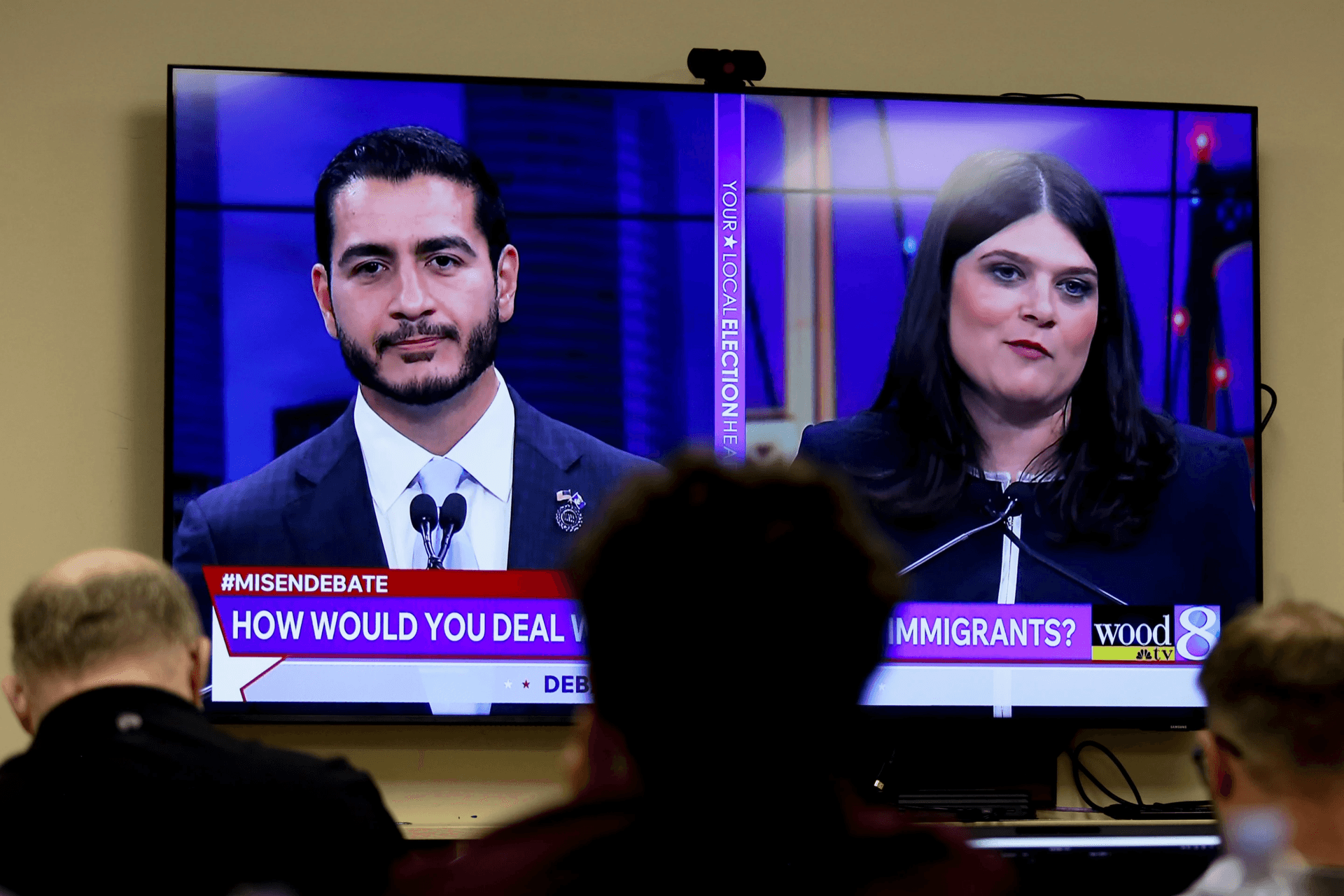
The Michigan Senate race is where this battle is playing out most intensely. Progressive Abdul El-Sayed, who has been endorsed by Sen. Bernie Sanders, trails Haley Stevens, who has been endorsed by Nancy Pelosi and Chuck Schumer, by 7 points in the latest Detroit News/WDIV-TV poll. In the RCP Average for the Aug. 4 primary, Stevens leads by 4 points.
While the polls currently favor Stevens, betting markets favor El-Sayed. In Polymarket’s prediction for the primary, El-Sayed has a 68% chance of winning.
In the general election, both Democrats lead Republican Mike Rogers, who ran for the Senate in 2024, by 0.5 points in the RCP Averages for their respective matchups. Betting markets give the eventual Democratic nominee a 72% chance of winning the general election.
Similarly, in the Wisconsin gubernatorial election, self-described democratic socialist Francesca Hong leads the betting markets for the Democratic primary. Polymarket currently gives her a 60% chance of winning, while former Lt. Gov. Mandela Barnes stands at just 30%. Barnes ran for the Senate in 2022 but lost to incumbent Republican Sen. Ron Johnson.
In the general election, the Democratic nominee will face Republican Rep. Tom Tiffany. Like Rogers, Tiffany is not generally considered a political firebrand, but he is a pro-Trump, MAGA-aligned candidate. Polymarket currently gives Democrats a 69% chance of winning the general election.
The two races will test whether progressive democratic socialist candidates can expand their appeal beyond heavily Democratic cities and congressional districts and win statewide in competitive battlegrounds. If they win, the results could be a significant indicator of what is to come in the 2028 presidential primary and of the Democratic Party’s direction beyond that election.
Pennsylvania
While Pennsylvania does not have a competitive Democratic primary, as incumbent Democratic Gov. Josh Shapiro ran unopposed, the election will be a significant leading indicator of where the battleground states are headed entering 2028.
In the latest Quinnipiac University poll, conducted July 9-13, Shapiro led Republican state treasurer Stacy Garrity by 13 points. The RCP Average has Shapiro leading by 20 points. Betting markets give Shapiro a 95% chance of winning.
Although an incumbent would be expected to lead in early polls and betting markets, these results indicate that Shapiro’s advantage extends well beyond the typical benefit of incumbency. According to the Quinnipiac poll, Shapiro has a positive net favorability rating of 18 points, one of the highest among the nation’s governors.
If Shapiro wins by 10 points or more, it could signal trouble for Republicans heading into 2028. Pennsylvania is likely to remain the nation’s most important swing state, leveraging more electoral votes than any other major battleground.
A decisive victory could also significantly boost Shapiro’s prospects as a presidential or vice-presidential candidate. Betting markets currently place him fifth, with a 5% chance of winning the Democratic presidential nomination behind Gavin Newsom, Alexandria Ocasio-Cortez, Jon Ossoff, and Kamala Harris. However, a strong victory could substantially improve his prospects, particularly because Pennsylvania will be critical to Democratic success in 2028.
State of Union
.