

Polling Pennsylvania: Data Center Discourse
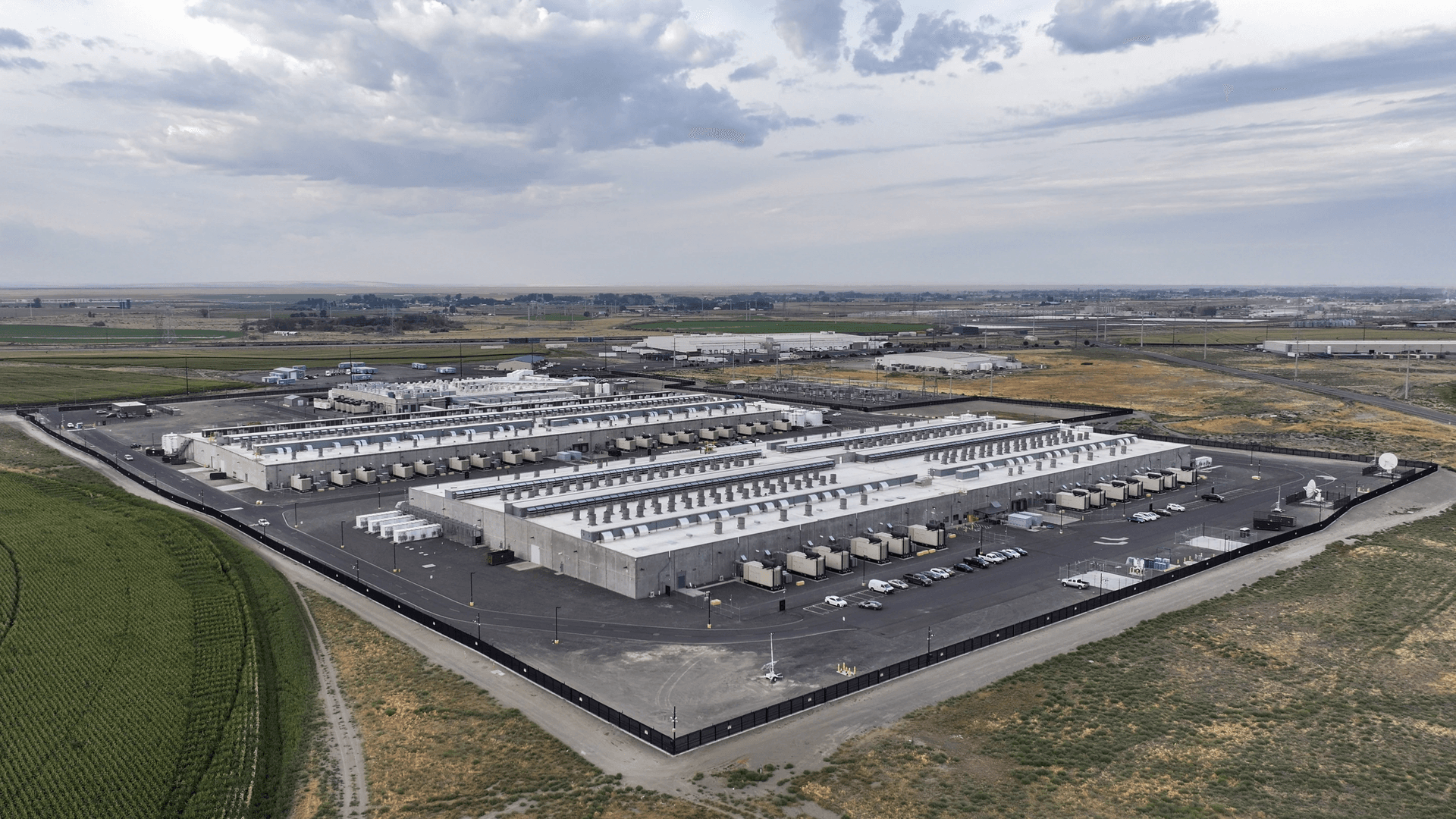
This is the final of four pieces in the latest installment of RealClear Opinion Research’s continuing exploration of Pennsylvania public opinion with Emerson Polling. We draw on a survey of 2,000 residents of the commonwealth. This time, we shift our focus a bit and explore attitudes surrounding data centers. This is a follow-up to a survey we ran seven months ago, one of the first to identify data centers and AI as a potentially potent political issue.
In December 2025, Pennsylvanians were roughly split on data centers being built in or near their community: 34% supported it, 42% opposed, 24% had no strong opinion either way. By July 2026, that had broken decisively. Support was down to 22%, opposition was up to 57%. The dam seems to have broken on data centers as a political issue.
Over the same period, the share of Pennsylvanians who say they’ve received no information about data centers from their local officials actually fell, from 71% to 58%. The share who’ve received “some” information rose from 23% to 33%, and those who’ve received “a lot” ticked up from 6% to 9% – within the error margin, but plausibly “real” given the broader context. The information gap narrowed even as opposition grew. The current crosstabs also show stronger opposition among respondents who report receiving information from local officials, although the survey cannot establish that the information itself caused the backlash.
The second surprise is who’s doing the opposing. The easy assumption is that a backlash like this skews rural and conservative: a “not in my backyard” reflex against industrial development. The survey tells a different story. Democrats oppose data centers more than anyone else, with 71% opposed and more than half “strongly” opposed. Republicans oppose data centers as well, but less intensely: A bare majority oppose them, and just 29% strongly oppose them. Independents land in between, at 61% opposition.
If there’s a partisan story here, it runs the opposite direction from what people might expect: Opposition to this specific kind of development reads, in this survey, as more of a Democratic-coded reaction than a Republican one. One plausible explanation may be that data centers’ land, water, and power demands have become environmental and quality-of-life concerns before they’ve become partisan tax fights. Follow-up surveys can test this.
Geography complicates the picture further. Statewide, opposition runs at least 2-to-1 in five of the six regions: Southeast, 62% oppose to 20% support; Northeast, 60% to 20%; South Central, 56% to 24%; Northwest, 54% to 16%; Southwest, 54% to 23%. Then there’s North Central, which looks like a different state entirely, where 39% oppose centers, and 39% support them, making the issue essentially a coin flip. The North Central sample is relatively small, so the precise split should be treated cautiously. Still, this is the same region that turned up as the outlier on a completely unrelated question about tax fairness, with voters less aggrieved there too. This, of course, is the “old Republican” Pennsylvania, as opposed to the remnants of suburban Republicans or the newer “MAGA Republican” concentration in the northeast and southwest.
Whatever is generating the statewide backlash, there are now live political issues in the Keystone State. Forty-nine percent of Pennsylvanians call the 2021 tax exemption for data-center equipment a bad thing for the state, versus 17% who call it good and 35% who aren’t sure. That gives the opposition a specific legislative choice to point to, one that nearly three-quarters of respondents with an opinion now call a bad thing.
All of this shows up sharpest in Pennsylvania’s 7th Congressional district, one of the most politically competitive districts in the country. We oversampled respondents there to make district-level analysis viable. On most of this survey’s other questions, like tax fairness, the billionaire tax, and the hedge-fund and private-equity exemption described in the survey, PA-7 looks almost exactly like the state as a whole. Data centers are the exception. Here, opposition runs 74% to 14% support, and just over half the entire district “strongly” opposes them rather than merely “somewhat” opposing them. PA-7 residents report receiving more information from local officials than the statewide average: Only 48% of PA-7 residents report receiving no information from local officials, compared with 58% statewide. Greater exposure to information has certainly not produced softer attitudes in PA-7: the district is considerably more opposed than the state as a whole. Fifty-eight percent of PA-7 residents call the 2021 tax exemption a bad deal, 9 points above the statewide number.
What makes this more than a policy footnote is that PA-7 is also about as close to a true toss-up as a congressional district gets: 39.7% of residents are registered Democrats and 40.3% are registered Republicans. The incumbent, Republican Ryan Mackenzie, holds a modestly positive favorability, 38% to 32%. At the same time, the Democratic challenger, Bob Brooks, has yet to develop a clear image: 34% are neutral toward him, while another 27% have never heard of him. In other words, this newly emerging issue that cuts across party lines could move voters in a way a generic tax argument might not.
This doesn’t look like a case of voters waiting for more information before making up their minds. It looks more like a fast-moving, cross-partisan backlash is brewing among people who understand the issue and regret earlier decisions. That now hangs over at least one competitive race, even though it isn’t clear whether either side has managed to lay claim to it.
State of Union
.