

Politics and Heritage Shape Americans’ World Cup Allegiances
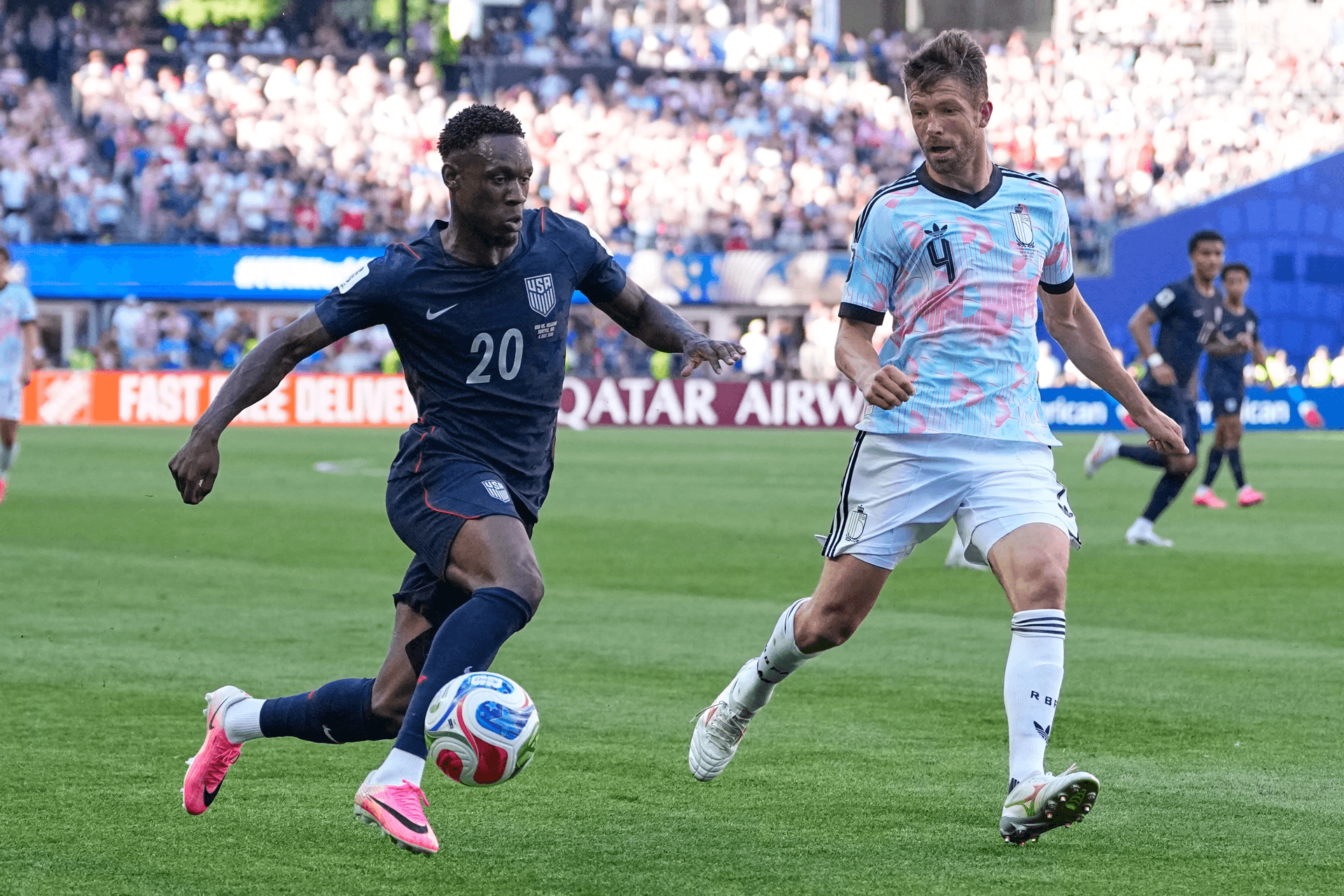
For the first time since 1994, the FIFA World Cup returned to North America, with most of the games being played in 11 of the United States’ biggest stadiums, in addition to five venues in Mexico and Canada. Appreciation for the United States Men’s National Team, which got out of the group stage before falling to Belgium, was widespread – but hardly universal.
According to a poll done by Freebets.com, a sports wagering platform based in London, nearly one-third of Americans are rooting for foreign teams over the United States. Various factors might explain this trend, which was documented even before President Trump weighed in on a controversial red card against a U.S. striker, ranging from the high number of recent immigrants in the United States to the fact that America has never won the World Cup.
Yet the most sobering fact is that on America’s 250th birthday young Americans don’t feel the tug of the red, white, and blue on their heartstrings. About half of those under 30, mostly Gen Z, have been rooting for a foreign team.
The survey collected responses from 1,800 Americans who follow World Cup soccer, 66% of whom are men. At 49%, Gen Z respondents were more likely than other generations to support another country’s team, followed by millennials (42%), and Gen X (31%). Even among flag-waving baby boomers, 26% say they prefer another team.
There are various factors leading to these preferences, although heritage has the most influence. Across 16 states, Mexico’s team claimed the favorite spot, most predominantly in California, Texas, Florida, and New York. Among Hispanic respondents, 43% favored Mexico, indicating a connection rooted in ancestry.
Among Gen Z respondents who are rooting for a foreign team, three-quarters said their support is tied to a celebrity, influencer, or athlete from that country, such as Lionel Messi. Gen Z was also more likely to root for a specific player than because of heritage, 21% to 18%. Boomers, by contrast, were more likely to cite heritage than a specific player, 28% to 20%.
Among the 36% of respondents rooting for an international team, liberals were much more likely than conservatives to say they supported a team other than the U.S. – 45% to 19%. The political climate also appears to be hurting support for the U.S. team: 25% of respondents said politics makes them less supportive, while 18% said it makes them more supportive.
There is an evident split among generations in their feeling of being American. Gen Z reports the weakest connection to national identity, and their Team USA allegiance follows the same pattern. The results show a split between politics and patriotism, with 15% reporting that politics has put them off of supporting the U.S. team, and 12% stating that they don’t feel patriotic about the country right now.
A simpler form of partisanship might be at play, too, one that Freebet.com didn’t delve into: Sports fans tend to root for the team they bet on.
State of Union
.