
Pennsylvania Poll: Shapiro Up, Fetterman Splits Parties, Health Costs Divide Voters
The latest joint polling effort between RealClear Opinion Research and Emerson Polling explores attitudes toward health care in Pennsylvania. As we typically do, we will give topline numbers in this article before exploring the data at a more granular level in a subsequent article.
But first, we continue our series exploring attitudes toward political leaders in the commonwealth. Gov. Josh Shapiro’s approval ratings received a bit of a bump since we last polled the state. He now sports a 50% approve/23% disapprove split. That’s up from 46%/23% last time. Shapiro continues to draw support from all political parties in Pennsylvania, with 81% of Democrats, 40% of independents and 30% of Republicans approving of the job he’s doing. Remarkably, only 46% of Republicans disapprove of his job performance.
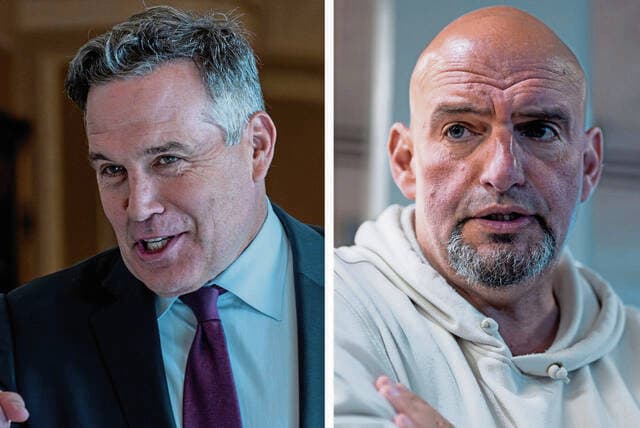
Pennsylvania’s junior senator, Dave McCormick, has slipped a hair, but well within the margin of error. Last time we polled, his job approval stood at 30% approval, 29% disapproval. Today those numbers have flipped, and he’s at 28%-31%. Among Republicans his job approval is positive, at 50% to 14%. Independents are mostly neutral on him, with 18% approving versus 25% disapproving. This leaves 46% who are neutral. Democrats, however, are strongly dissatisfied with him. Just 17% approve of his job performance, while 54% disapprove.
This leaves Pennsylvania’s senior senator, the enigmatic John Fetterman. Fetterman’s maverick votes – at least by modern standards – give him a coalition that looks strikingly like McCormick’s, even though McCormick is a Republican and Fetterman is a Democrat. 62% of Democrats disapprove of the job Fetterman is doing in the Senate, with just 24% approving. At the same time, 60% of Republicans approve of his job performance, while just 20% disapprove. Independents are split, 28%-30%.
Pennsylvanians are split over the price of health care in the state. Forty-eight percent say it is easy for them to afford health care costs, while 46% disagree. That number peaks at 60% for 50-59 year olds, which does make some sense: This the age when health begins to decline for many, but they are still too young to qualify for Medicare. Nevertheless, 39% of Medicare recipients report difficulty paying for health care, while 54% of Medicaid recipients say the same thing.
Slightly more than 30% of Pennsylvanians report having had problems paying for health care. Eleven percent say that they have delayed filling their current drug prescription, 13% say they have borrowed money to pay for health care, 6% say they have skipped a meal due to medical bills, 6% say they have cut back on driving, and 6% say they have skipped utility bill payments. While those may seem like low percentages, remember that 6% in one single category works out to roughly 1 in 15 Pennsylvanians.
We also asked about the quality of emergency care. Half of Pennsylvanians report having been to the emergency room in the past two months, either for themselves or for a loved one. Experiences vary. Almost half of Pennsylvanians report being treated in less than an hour, while 7% report taking over five hours to be treated.
Overall, 70% of Pennsylvanians report that it is “easy” or “somewhat easy” to access health providers in their area; a similar share respond that their area has enough hospitals to serve local residents. Reflecting this, 22% of Pennsylvanians report that a lack of transportation has kept them from seeking care in the last 12 months.
Finally, we asked a battery of questions about reforms that Pennsylvanians may support or oppose. When asked if they would support or oppose requiring Medicaid or SNAP beneficiaries to show proof of work, 51% say yes, while 30% say no. Debt forgiveness for nurses is very popular, with 73% supporting it and 6% opposing it. Expanding nursing programs is overwhelmingly popular; 79% of respondents support it, while 3% oppose. Only 6% would oppose a $1-$5 per hour pay increase for direct care workers.
Pennsylvanians seem happy with their health care experiences. Some 76% rate them “excellent” or “good,” while just 4% say they were poor. But there’s clearly room for improvement, as 46% of Pennsylvanians describe health care in the U.S. as having “major problems,” while 22% describe the system as being in crisis.
State of Union
.