

Passing the Buck
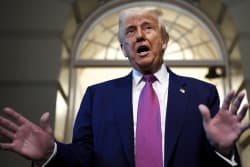
President Trump took to social media this week to make the case (yet again) that he and his policies are not to blame for the high cost of gasoline and groceries. Price increases in the United States, he insisted in a Truth Social post, “were caused by Sleepy Joe Biden and the Biden Administration, not by ‘TRUMP.’”
The current president, whose second term began in January 2025, went on in this vein for a while.
“Even Oil was higher under Biden than it is right now, and we prevented Iran from having a Nuclear Weapon!” Trump added. “With the temporary exception of Oil, prices are coming down sharply, and Oil will drop like a rock as soon as the Military Conflict with Iran is over, and that will not be long.”
If it seems unmanly to point the finger at a guy who’s been out of office for a year and a half, Trump is hardly the first president to employ this tactic. Blaming your predecessor for the performance of the U.S. economy is a familiar, if unbecoming, presidential tradition. Barack Obama did it. Joe Biden certainly did, too.
When inflation hit, President Biden said, in turn, (1) it wouldn’t last long; (2) Vladimir Putin was to blame; (3) or, alternatively, that COVID was the culprit; (4) that the real villain was corporate “price gouging”; (5) that inflation was much higher under Trump, which was simply false.
In other words, we’re a long way removed from Harry Truman, who famously displayed on his Oval Office desk a sign that proclaimed, “The Buck Stops Here.”
Here’s the thing, however: Voters don’t necessarily care. They are less interested in excuses than results. Moreover, although they harbor few illusions that either political party can simply turn inflation and affordability concerns around, voters still appeared to be poised to take out their frustrations on the party in power. That, at least, is the implication of a new CBS News poll done by YouGov.
Conducted nationally between Sept. 8 and Sept. 11, the CBS News/YouGov survey polled 2,460 U.S. adults and has a margin of error of 2.3 points. Its findings suggest that Americans, whether pro-Trump or anti-Trump, view the 2026 midterms as a referendum on the 47th U.S. president. Given his negative job approval ratings on issues ranging from the Iran war to the economy, this is not working in Republicans’ favor, at least for now.
“Prices and inflation are driving voter sentiment in 2026 against the party in power, just as they did two years ago,” CBS reported. “Not because they necessarily think they'll be better off – most don’t think either party can help their finances.”
The negative vibes toward Republicans, the poll suggested, come from sheer frustration.
State of Union
.