

Massie’s Support Reveals Limits of Trump’s GOP Control
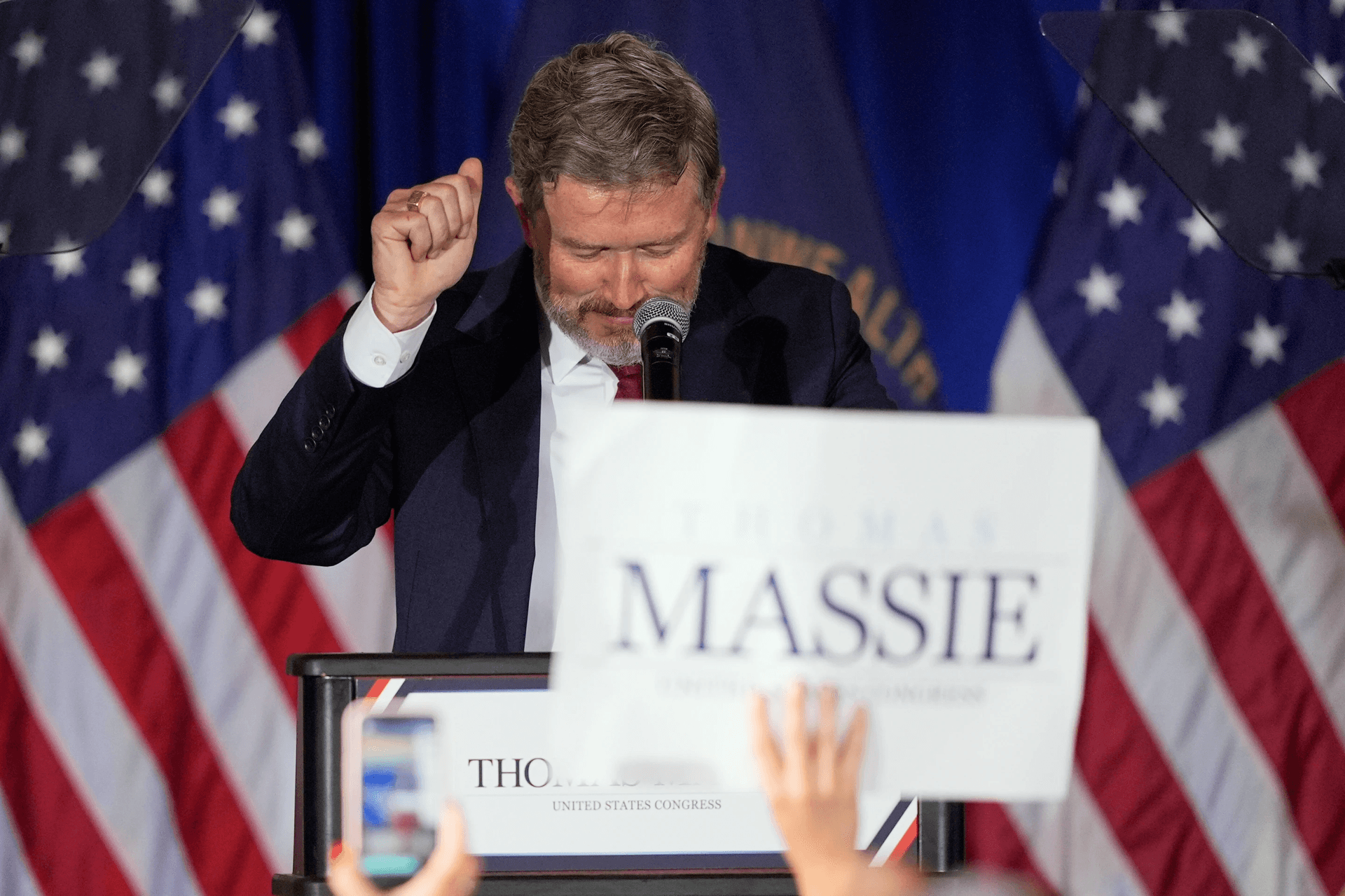
After Rep. Thomas Massie lost to Trump-backed Ed Gallrein in Tuesday’s Republican primary for Kentucky’s 4th District, Trump’s supporters said the defeat showed how firmly he controls the party. While Gallrein’s victory does reaffirm that Trump’s endorsement carries weight, Massie’s base of support indicates that Trump is losing a significant proportion of the Republican voting base.
In Tuesday’s election, Gallrein beat Massie by 10 points, approximately 55%-45%. Massie still won 45% of the vote despite both the president and War Secretary Pete Hegseth attending rallies in support of Gallrein. Massie was also outspent on ads, with $18.8 million spent supporting Gallrein or attacking Massie, while only $13.8 million was spent supporting Massie or attacking Gallrein, according to AdImpact.
While incumbents usually have an advantage, which explains some of Massie’s 45%, the high levels of spending and attention on the race should have significantly lessened that advantage, which largely comes from name recognition and support from the party.
Another high-profile Republican primary in recent history where the challenger had Trump’s endorsement was Rep. Liz Cheney’s race in 2022. Despite Harriet Hageman spending far less, approximately $3.5 million, and Cheney spending $8 million, Cheney received only 29% of the vote, 16 points below Massie’s share. This indicates a possible decline in Trump’s ability to command Republican votes.
The most significant group of Republican voters who supported Massie was that of young people. In the poll where results most closely mirrored the final election outcome, 72% of 26- to 35-year-olds supported Massie, and 51% of 36- to 45-year-olds supported him. Only among older generations did Gallrein have majority support, with just over 62% of those over 66 years old backing him, according to the poll.
The divide between young and old can be seen in one of the issues on which Massie has been most outspoken, and which has recently hurt Trump’s approval: the Iran war. In the latest Economist/YouGov poll, the war had just 30% support overall. But support was even lower among 18- to 29-year-olds, at just 16%, and among 30- to 44-year-olds, at 22%. Criticizing the Iran war in early March, just days after it began, Massie said “Have we learned nothing from the laundry list of wars and regime change experiments we sparked across the Middle East, that have racked up a total of at least $8 trillion of debt in Iraq, Libya, Syria, Afghanistan?”
While young people tend to be more liberal, and are therefore more likely to oppose the war, Trump’s handling of the war is unpopular even among young Republicans. In the latest New York Times/Siena poll, the majority of Republicans, 64%, approved of Trump’s handling of the war. However, only 39% of 18- to 44-year-old Republicans said the same, while a greater share, 53%, disapproved.
The most significant point of disagreement between junior and senior Republicans was on the question of how future Republican administrations should approach Israel. Only 20% of young people said the next administration should follow Trump’s lead, while 70% said it should move in a new direction. Among those 45 and older, 72% said the next administration should follow Trump’s lead.
This has led to much higher disapproval of the president among young conservatives. Only 60% of 18- to 44-year-old Republicans approve of Trump’s handling of his job as president, compared with 83% of Republicans 45 and older.
These polls, combined with Massie’s sizable base of support despite Trump’s opposition, indicate that unless the Republican Party charts a new path on foreign intervention, especially in the Middle East, it will struggle to retain the young voters it attracted in 2024.
State of Union
.