

Democratic Voters Energized Ahead of Midterm Elections
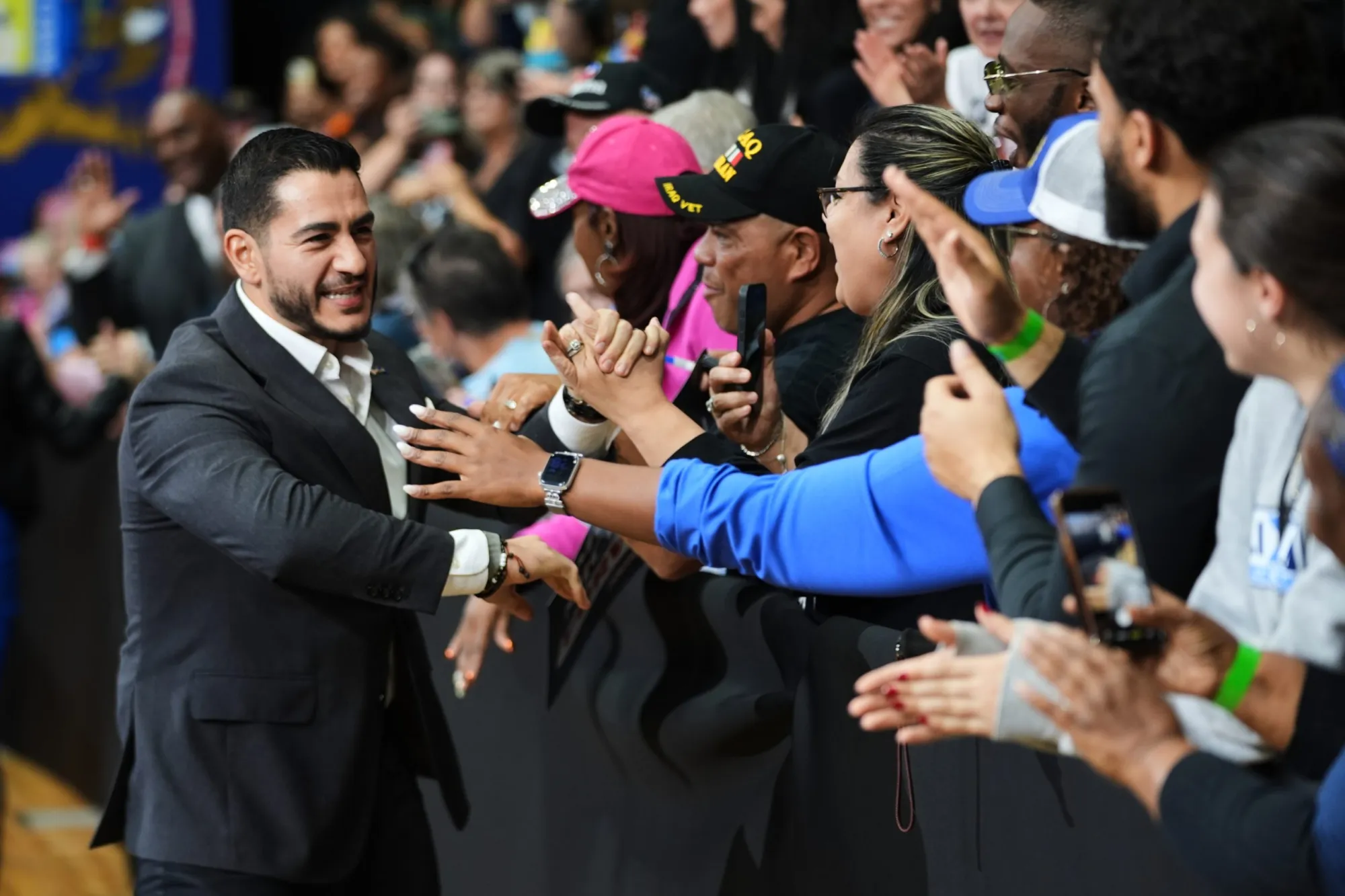
American voters who have not already cast ballots early will head to the polls Tuesday, and the majority of them are more engaged than usual for a midterm election, according to a new Gallup survey. Around 56% of U.S. adults said they have given “quite a lot of thought” to the election, which is the highest measured point Gallup has recorded for a midterm year. The closest to this level was in 2010 when 55% of American adults said they had been thinking about the elections.
Throughout modern American history, the party in power in the White House loses congressional seats, whether Democrat or Republican. It’s a trend that President Donald Trump says is mystifying. Given that proclivity already, though, years that show higher voter engagement also contribute to the biggest congressional upsets.
Midterm elections have only grown in influence and in public attention. Between 1958 and 1982, less than one-third of American adults said they had given much thought to the upcoming elections. Since 1990, that ratio has risen to 40% and above, peaking in 2018 with 69% of registered voters saying they were enthusiastic about participating. And according to Gallup’s results, slightly more Democrats (65%) are thinking a lot about the elections compared to Republicans (60%).
Notably, though, the Gallup survey includes all American adults, not simply likely voters. Around four in 10 respondents said they planned on voting before Election Day, either by mail or in person.
Opinions on whether those votes will be accurately counted are a different matter. Around 61% of American adults said they are very or somewhat confident that ballots will be accurately cast and counted, slightly higher than in 2024 but below a 75% confidence rate in 2006. Views of election integrity fall along partisan lines, with 72% of Democrats expressing high confidence compared to only 54% of Republicans. In one twist, Democratic confidence is down compared to 2024, and Republican confidence is up.
According to the University of Florida Election Lab, more than 57 million Americans had already voted as of Monday afternoon. Of those, Democrats lead Republicans in early voting by more than 3 million.
“Democrats are getting out and making sure that they’re getting out to vote early because they also know that the Republicans may try to interfere with the election,” Democratic strategist Jenifer Fernandez Ancona told RealClearPolitics about early voting. “Too big to rig has been a mantra among Democrats in this election of saying we have to make this election too big to rig, and that has resulted in the actual numbers of people showing up and voting early.”
Trump has attempted to change election administration to apply more checks to the process. He has claimed that high rates of noncitizen voting amount to a Democratic scheme to import illegal immigrants and take over elections. While no audits have found this, several states have removed noncitizens from their voter rolls, most recently in New Jersey. Trump has also tried to use the U.S. Postal Service for ballot verification, though that effort is tied up in the courts. Lower courts and the Supreme Court blocked two executive orders to require proof of citizenship to vote and to use the U.S. Postal Service to verify eligible voters.
Over the past two years, the Justice Department has seized voting materials from Georgia and Arizona, investigating the 2020 election. It has also gone to several states requesting voter rolls. More recently, the DOJ sued California for refusing to remove 20,000 voters that the DOJ said were likely noncitizen voters because their citizenship had not been verified. Courts have already sided with California, but the DOJ petitioned the Supreme Court on Monday to block California from processing the ballots. Judges on the 9th Circuit Court of Appeals, one Trump appointee and one Biden appointee, said it could disenfranchise legitimate voters and that a longstanding legal precedent blocks changing election rules close to the election.
The DOJ also preemptively sued to block the election results in Alaska’s Senate race if Democratic challenger Mary Peltola wins. The administration argued that Peltola’s campaign attempted to defraud voters by propping up an independent candidate with the same name as incumbent GOP Sen. Dan Sullivan. If Sullivan, the incumbent, loses, the DOJ argued it would be because voters were confused about Dan J. Sullivan, the challenger. U.S. District Judge Sharon Gleason tossed out the case on Sunday, but the DOJ is expected to appeal her ruling.
Last week, Trump was asked if he would respect the results of the midterm elections.
“If they’re honest elections,” Trump told reporters. He was traveling to Minnesota to stump for Republican Senate candidate Michele Tafoya. In a Truth Social post, he added, “Don’t allow them to play with the votes after the race is over. The federal government will be watching closely… The only way she can lose is if they cheat by playing games with the ballots as they come in.”
State of Union
.