

Best-Case Midterm Scenarios for Democrats and Republicans
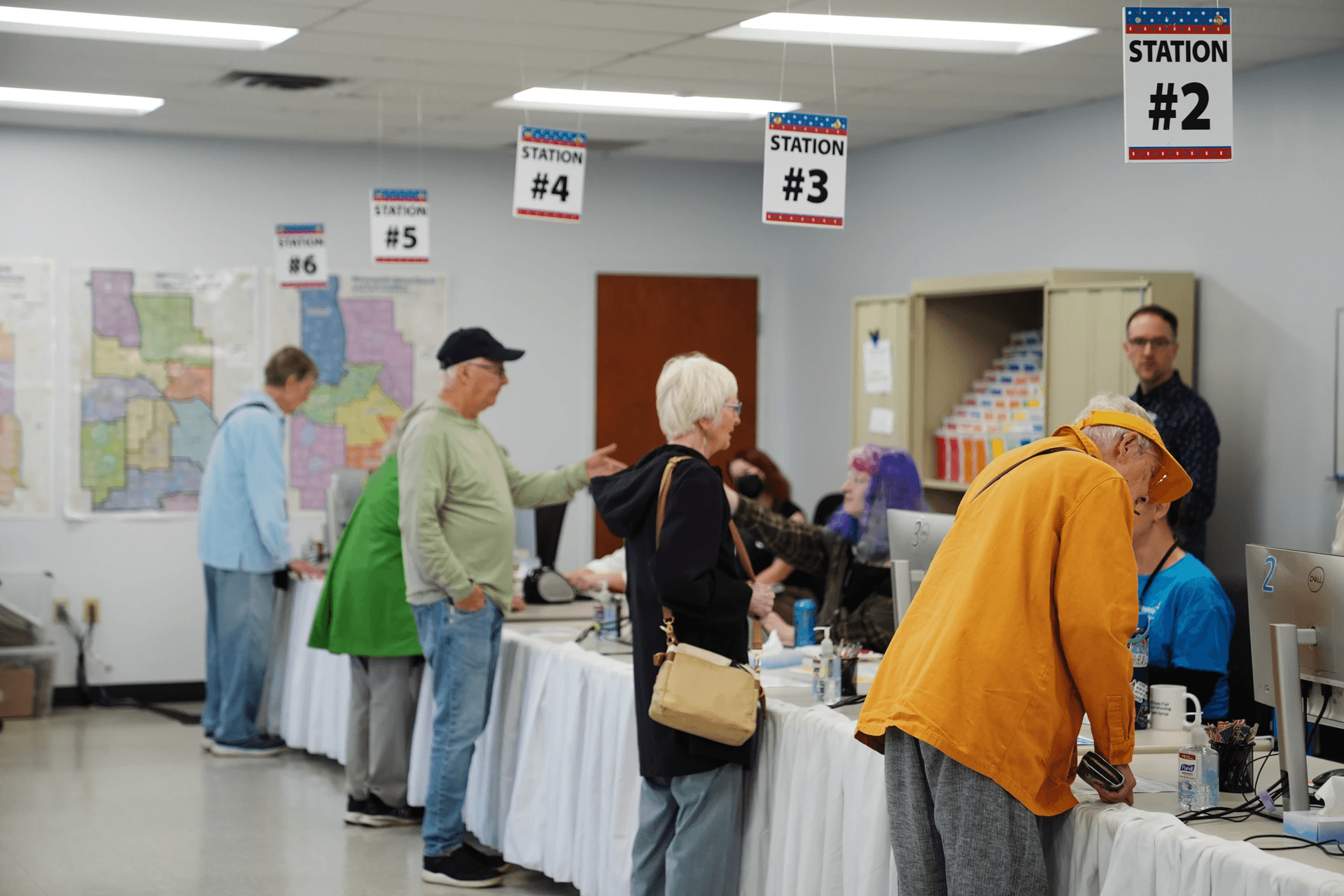
The 2026 midterms currently favor Democrats, who lead in the RealClearPolitics Polling Average Generic Congressional Ballot by 8.1 points, a 10.8-point swing from the 2024 national House vote. If that advantage holds, Democrats could make major gains in both chambers, but even a modest polling change or error could produce a very different outcome in November.
Best-case scenario for Democrats
If their current polling advantage holds, or if polls are even somewhat underpredicting Democratic performance, there will be a blue wave in November.
The House of Representatives is a foregone conclusion in this case. According to betting markets, Democrats have a 93% chance of taking control of the House, which would become 100% if they maintain their current significant lead in the generic congressional ballot.
Estimating the size of a potential Democratic House majority is difficult given the number of races and map redraws since 2024. Republicans could gain roughly 10 seats on net from redistricting if the new maps perform as intended. However, in 2024 they won 25 House seats by less than 10.8 points, the swing implied by comparing the current generic congressional ballot polling with the 2024 national generic congressional vote, and 33 seats by less than 13 points, a swing that could occur if polls are underestimating Democrats.
After subtracting the potential 10-seat Republican gain from redistricting, those scenarios would leave Democrats with approximately 230-238 seats, a 25- to 41-seat advantage over Republicans.
The Senate is where the picture gets more interesting for Democrats. Currently, states that were toss-ups in 2024, like Georgia and North Carolina, are in RealClearPolitics’ Lean Dem category, as Democratic candidates lead by margins of more than 7 points.
Democrats also lead in seven of the nine toss-up elections, which include Texas, Ohio, and Alaska, states Trump won in 2024 by 11 points or more. With just the states where they currently hold a polling lead, Democrats would secure a 52-seat majority.
Democrats also have opportunities in several states that are very red-leaning. In Kansas, the latest Emerson poll had incumbent Republican Roger Marshall trailing Democrat Adam Hamilton by 2 points. In Florida, which Trump won by 13 points in 2024 and Gov. Ron DeSantis won by 19.4 points in 2022, the latest St. Pete Poll had Republican Ashley Moody up just 0.4 points over Democrat Angie Nixon. Even in South Carolina, Republican Darline Graham Nordone leads Democratic challenger Annie Andrews by just 3.5 points in the RealClearPolitics Polling Average.
While even in the best-case scenarios for Democrats it is unlikely they pick up all of these seats, Iowa and Kansas are also certainly in play, and a particularly good showing from Andrews or Nixon could put Florida or South Carolina in play as well. This puts Democrats’ best-case scenario at between 53 and 55 Senate seats.
Best-case scenario for Republicans
Even with the possibility of sweeping Democratic gains in both chambers, Republicans could still keep the races competitive if polls are overestimating Democratic performance by just a few points.
The House is very hard to win even in the best-case scenario. In 2024, there were 14 House races that Republicans won by 4 points or less. To flip these seats, which could be enough to flip the House, Democrats would only need to win the national environment by 1-2 points, considering Republicans won the national environment by 2.7 points in 2024. This would require Republicans to produce tangible improvements over the next two months, such as progress toward ending the war with Iran or a decline in gas prices, while also narrowing Democrats’ polling lead and benefiting from polls that are overestimating Democratic performance by a significant 3-4 points.
Retaining Senate control presents a much more manageable path for Republicans, with several of the closest races separated by just a few points. Of the toss-up Senate contests, three have the Democratic candidate leading by 2 points or less, and five have Democrats leading by 3 points or less. Republicans also remain ahead in Iowa, Kansas, South Carolina, and Florida, despite some individual polls showing Democrats close or even leading in those states.
Republicans could also close the distance in Texas and Alaska and even have solid chances at flipping Michigan and Maine, where Democrats Abdul El-Sayed and Troy Jackson lead by just 2.1 points and 1.8 points, respectively, in the RealClearPolitics Polling Averages.
By simply holding the Republican-leaning states and Iowa, Kansas, Texas, and Alaska, Republicans would have enough to keep 50 seats, which would be enough for a majority because the tie-breaking vote comes from the vice president. In best-case scenarios, in which they are able to hold Maine and Ohio and pick up Michigan or New Hampshire’s Senate seats, they could keep even more, with between 51 and 53 seats.
Polymarket’s Senate control market also remains relatively close, with Democrats currently at 61%. That still leaves Republicans with a meaningful path to retaining the chamber even without the most absolute best-case scenario coming to fruition.
State of Union
.