

As Kansas Goes...
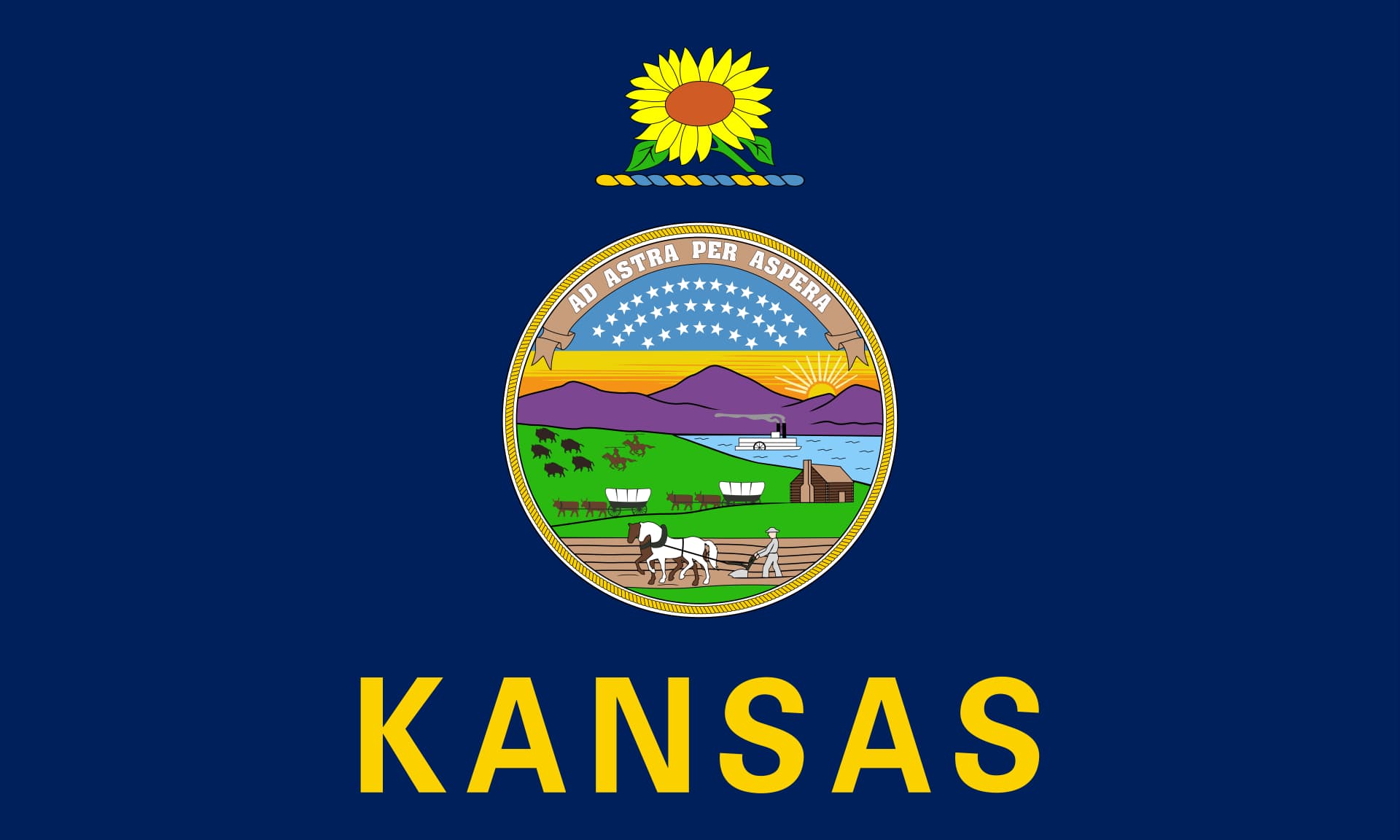

There’s a reason Republicans aren’t panicked about the polls showing the Kansas Senate race is effectively tied. It’s also why even Donald Trump-bashing television networks are scarcely focusing on upstart Democrat Adam Hamilton’s bid to unseat incumbent Republican Roger Marshall. Here is the rationale: The last Democratic senator from the great state of Kansas was born in 1879.
His name was George McGill, and he was first elected to fill a vacancy in 1930, then reelected in his own right in the Franklin D. Roosevelt-led Democratic landslide two years later. McGill’s career didn’t survive the grueling Farm Belt hardships of the Great Depression; however, a fate that befell many Democrats in Kansas and other Midwestern states. He lost in 1938 – never to be replaced in the U.S. Senate by another Democrat.
George McGill apparently liked living in Washington, however, because he didn’t take defeat very well: He ran for the Senate again in 1942, 1948, and 1954, losing each time by large margins. And that’s pretty much the way it’s been for non-Republicans in the Jayhawker State.
Yes, there have been a few close calls along the way, but not many. In the 1974 Watergate-fueled Democratic landslide, Dr. William Roy came within a point or two of defeating Bob Dole. And in the 2014 campaign season, independent Greg Orman chased the Democrat out of the race altogether and gave incumbent Republican Sen. Pat Roberts a scare. But that’s all. So why should this year be any different?
Two main reasons come to mind. The first is that the landscape in Kansas – and nationally – is simply different in 2026 than it was a dozen years ago. The campaign of 2014 was President Obama’s second-term midterm election – like Trump today – and nationally the environment worked out to Republicans plus 8 percentage points. In other words, Greg Orman faced headwinds that were probably insurmountable.
The other difference is the contrast between the two sets of candidates. Sen. Pat Roberts, who was nearly even with Orman at this stage in the 2014 campaign (Roberts ended up winning by 11 points), was a well-liked U.S. Marine and former journalist who was comfortable in his own skin, rarely made gaffes, and at least paid lip service to the idea of bipartisan compromise.
Sen. Marshall, as Kansas-based political writer David Von Drehle has noted, has a “ready-fire-aim approach to public speaking [that] has left his candidacy riddled with self-inflicted wounds.” Von Drehle continued: “Asked whether he’s okay with Iran having ballistic missiles (the program Trump was promising to destroy), Marshall said, ‘I would prefer they didn’t. But I don’t think that’s the key issue here. I think that they have to be able to defend themselves.’” Of rising gas prices triggered by the war: “Freedom is not free.”
That’s true enough, but it’s not only President Trump’s war in Iran that has exacerbated the lives of Kansas farmers who rely on diesel oil. It’s also the tariffs, particularly with China and Canada, which may be the single issue that determines the outcome of this campaign. Marshall (and he’s hardly alone among Republican candidates this year) has struggled to defend Trump’s erratic approach to global trade.
Masud Chand, a professor of international business at Wichita State University, has told local reporters that Kansas is one of the most export-dependent economies in the country. “One out of six of all jobs in Kansas are indirectly based on international trade,” he said. “So this is critical for us, and it’s not just large companies. Over 3,000 Kansas companies actually export. More than 80% are small to medium enterprises.”
Kansans, presumably, know this. Is it enough? Perhaps. For starters, Adam Hamilton is so moderate by nature that he initially weighed running as an independent. He’s also a naturally conciliatory figure who happens to be the founder and lead pastor of the largest church in Kansas. Nor is he shy when it comes to talking about his faith.
“I am a Democrat who actually knows the Lord’s Prayer,” Hamilton said at a recent campaign event. “When it says, ‘give us this day our daily bread,’ it’s reminding us to make sure that people have enough to eat.”
So far, two independent polls have been done in Kansas. The first, from Sep. 8 – Sept. 10, showed Marshall leading Hamilton by 5 percentage points – though this poll projected a huge Republican voting edge in November. That’s understandable, given that Trump carried the state all three times he’s run for president by an average of 17 points, but that’s most likely not going to be the electorate that goes to the polls this year. And a subsequent survey by Emerson College Polling raised eyebrows by showing Hamilton with a 2-point lead.
No less an authority on GOP strength in the state than Greg Orman sounds bullish on Hamilton’s chances.
“Kansas is in play,” Orman said Monday. “Not only is the national political environment highly favorable for Democrats, but Adam Hamilton is a once-in-a-generation candidate. I think the Rev. Hamilton can be the first Democratic U.S. Senator from Kansas in 90 years.”
Which brings us back to George McGill. To ease the blow of his setbacks in the voting booth, FDR appointed McGill to federal office where he could remain in Washington while looking after Kansans’ interests. He was also reappointed by President Harry Truman. The position? Federal Tariff Commissioner.
State of Union
.