

A 2010-Style Disaster Brewing in Michigan for Democrats
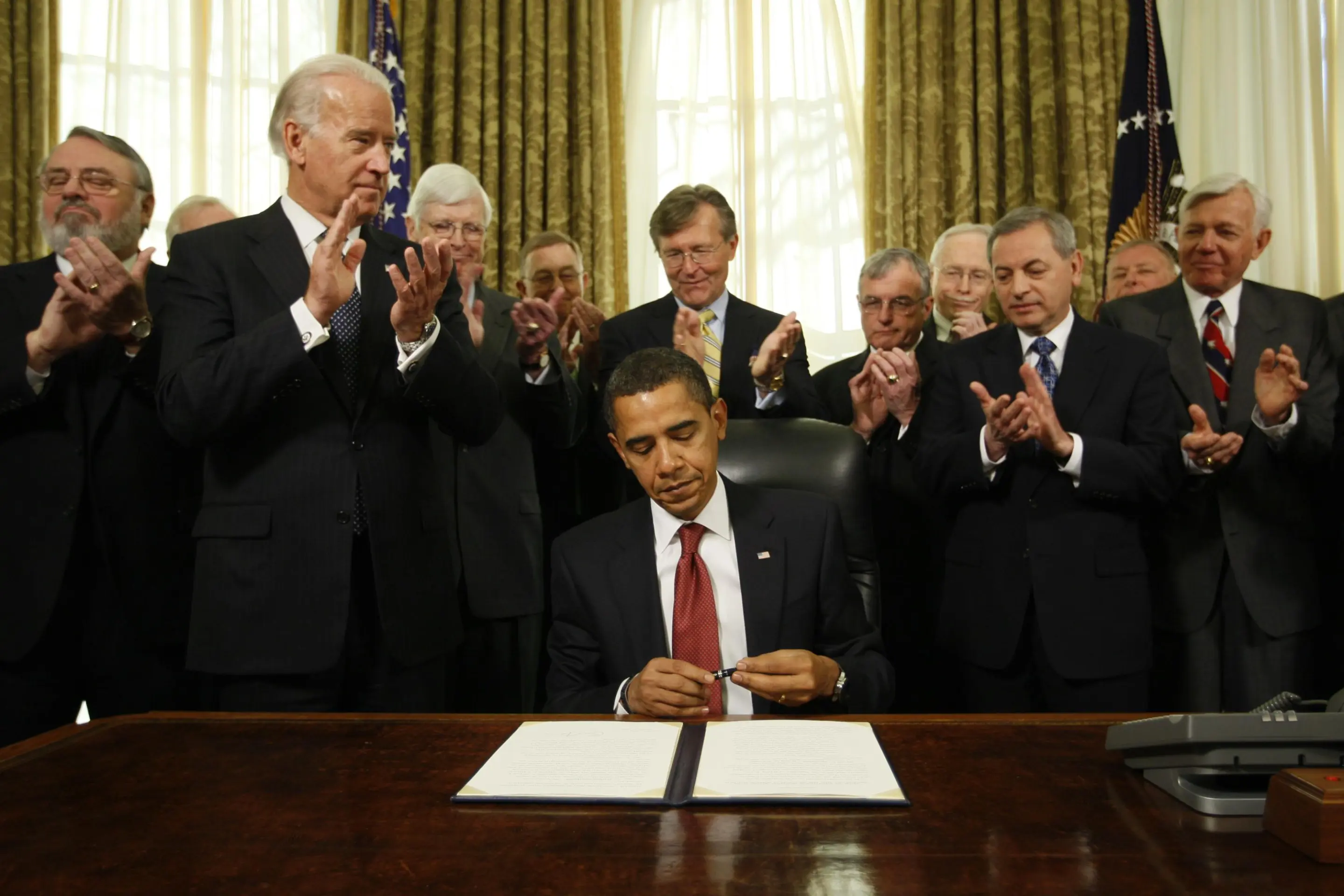
Take a walk down memory lane with me. It’s a midterm election, and things are not looking good for the president’s party. A grassroots revolt has erupted among the opposition party, which has infused it with much-needed energy and citizen activism, but has also produced some questionable, untested candidates running for federal office.
I’m speaking about 2010, of course. Barack Obama, elected overwhelmingly in 2008, ran into a near immediate backlash to some of his policy initiatives – particularly a federal takeover of the healthcare system – reinvigorating the Tea Party movement among conservatives. The GOP, whose obituary was repeatedly written by the commentariat in late 2008 and early 2009, suddenly sprang back to life, winning gubernatorial races in Virginia and New Jersey in November. Two months later, in the political shot heard round the world, Republican Scott Brown won a special election to the U.S. Senate in Massachusetts to replace liberal icon Ted Kennedy.
The 2010 midterm did indeed turn out to be a banner year for the GOP: a pickup of 63 seats in the House of Representatives and a gain of six seats in the U.S. Senate. However, Republicans fell short of taking back the Senate Majority, in part because they lost two winnable races by nominating problematic candidates: Sharron Angle, who ran a subpar campaign and fell to Harry Reid by 41,424 votes, and Christine O’Donnell, who lost the special election to replace Joe Biden in Delaware and aired an ad infamously claiming, “I am not a witch.”
The moral of the story is that even in the best years, a party may occasionally nominate candidates that are either too flawed or too outside the mainstream to make it across the finish line.
Which brings us to Michigan. The conventional wisdom is that 2026 is shaping up to be a blue wave year for Democrats. They are heavily favored to win the House, and there is increasing optimism among political operatives (and speculation among the legacy media) that they have a chance of picking up a net gain of 4 Senate seats and winning back the majority in the upper chamber as well.
Those plans are currently being complicated by the Democratic Senate primary in Michigan. A new poll this week from Mitchell Research shows Abdul El-Sayed leading Haley Stevens and Mallory McMorrow by double digits. In the poll of 405 likely Democratic primary voters, El-Sayed wins 28% support, Stevens 18%, and McMorrow 17%.
El-Sayed is clearly the most controversial candidate in the race. In April, he shared a stage with left-wing firebrand Hasan Piker, known for his antisemitic and pro-Hamas rhetoric. El-Sayed also made news last month by attacking JD Vance’s wife and kids on a left-wing podcast. Most recently, Politico reported that while El-Sayed has repeatedly referred to himself as a physician, there is no evidence he has a license to practice medicine in Michigan or New York or that he ever saw patients.
Some Democrats have begun to fret publicly that nominating El-Sayed would be a 2010-style disaster for the party. However, in fairness to El-Sayed, the same Mitchell Research poll shows him running roughly the same as Stevens and McMorrow in hypothetical general election matchups against Mike Rogers, the Republican who is running unopposed in his primary. Rogers currently leads Stevens by 3 points, McMorrow by 2 points, and El-Sayed by 1 point.
And therein lies the real rub: Michigan is a state that Trump has won narrowly in two of the last three elections. Mike Rogers is a serious candidate who just narrowly lost a Senate bid in 2024 to Elissa Slotkin by less than 20,000 votes out of more than 5.4 million ballots cast.
A loss in Michigan would almost certainly doom Democratic chances of winning back the Senate. Democrats will make their choice on Tuesday, August 4, which, for better or worse, will seal their fate on November 3.
State of Union
.